
Last Updated: August 2026
Published by: Orio Pharma — a specialist oncology medicine supplier serving patients, pharmacies, and distributors worldwide.
Medical Review: Reviewed by Dr. Farhan Hossain, MBBS, MD (Oncology)
Content Basis: This article is based on official prescribing information, product monographs, and regulatory product documentation from FDA and DGDA (Directorate General of Drug Administration, Bangladesh).
Sources: ventoxen.com, go.drugbank.com, ema.europa.eu, drugs.com, accessdata.fda.gov, fda.gov, accessdata.fda.gov, accessdata.fda.gov

Key Takeaways
- Venetoclax is a BCL-2 inhibitor within the antineoplastic therapeutic class, approved for adults aged 18 years and older with chronic lymphocytic leukemia (CLL) or small lymphocytic lymphoma (SLL), and, in combination with azacitidine, decitabine, or low-dose cytarabine, for newly-diagnosed acute myeloid leukemia (AML) in adults aged 75 years or older or who have comorbidities precluding intensive induction chemotherapy.
- It works by binding the BCL-2 protein’s BH3-binding groove, displacing pro-apoptotic proteins like BIM to restore programmed cell death in malignant cells.
- Venetoclax 100 mg tablets are available in Bangladesh under brand names such as Venclax, manufactured by Beacon Pharmaceuticals PLC, and Ventoxen, among other locally available formulations.
- Because venetoclax is metabolized via CYP3A4, drug interactions and monitoring protocols must be managed by the treating physician in accordance with official prescribing information.
Venetoclax 100 mg: Overview and Therapeutic Class
Venetoclax is a BCL-2 inhibitor classified within the antineoplastic agent therapeutic class, developed for use in select hematologic malignancies. It is manufactured as an oral tablet available in 10 mg, 50 mg, and 100 mg strengths, allowing flexibility for physician-directed treatment planning. As a targeted small-molecule therapy, venetoclax represents an important option within modern oncology protocols for chronic lymphocytic leukemia, small lymphocytic lymphoma, and certain presentations of acute myeloid leukemia.
The clinical information presented in this article reflects publicly available prescribing information and regulatory documentation for venetoclax-class therapies. It is intended to support informed evaluation by pharmacists, procurement professionals, and institutional buyers, and does not substitute for individualized guidance from a treating oncologist or the official prescribing information for any specific branded product.
For pharmaceutical buyers serving the United States market, venetoclax 100 mg tablets are available through Bangladeshi-manufactured brands including Veneta, Ventoxen, Ventonix, Ventax, and Venclax. These formulations are produced under established pharmaceutical manufacturing standards in Bangladesh and are supplied for export to international markets, including the United States, with additional availability for buyers in Pakistan and Bangladesh. This article outlines the clinical profile, regulatory context, and sourcing pathway for procurement professionals evaluating venetoclax supply options.

Approved Indications: CLL, SLL, and Beyond
Venetoclax carries regulatory approval for multiple oncology indications. Its primary approved use is in adults with chronic lymphocytic leukemia (CLL) or small lymphocytic lymphoma (SLL), where it may be administered as monotherapy or in combination with acalabrutinib. Venetoclax is also approved for use in adults with newly-diagnosed acute myeloid leukemia (AML), administered in combination with azacitidine, decitabine, or low-dose cytarabine, for patients who are 75 years or older or who have comorbidities precluding intensive induction chemotherapy.
Across both the CLL/SLL and AML indications, venetoclax is approved for patients aged 18 years and older. This age threshold applies consistently to each indication, and prescribing decisions remain the responsibility of the treating oncologist based on individual patient assessment, disease staging, cytogenetic risk factors, and prior treatment history.
In the United States, venetoclax received FDA approval in 2016, establishing the drug class within the national regulatory framework for hematologic oncology therapies. Since that approval, venetoclax-based regimens have become an established component of treatment algorithms for CLL/SLL and AML, reflecting the drug’s role as a targeted, mechanism-based alternative to traditional cytotoxic chemotherapy in appropriate patient populations. Oncology guidelines have continued to refine the sequencing and combination strategies for venetoclax as long-term clinical experience has accumulated.
How Venetoclax Works: Mechanism of Action
Venetoclax functions as a selective, orally bioavailable inhibitor of the BCL-2 protein, a regulator of programmed cell death that is frequently overexpressed in chronic lymphocytic leukemia and other hematologic malignancies. BCL-2 overexpression allows malignant cells to evade normal apoptotic signaling, contributing to disease persistence and treatment resistance.
Venetoclax binds directly to the BH3-binding groove of the BCL-2 protein, displacing pro-apoptotic proteins such as BIM that are normally sequestered by BCL-2. This displacement initiates mitochondrial outer membrane permeabilization, triggering downstream caspase activation and programmed cell death in malignant cells. By selectively targeting this apoptotic pathway, venetoclax offers a mechanism-driven approach distinct from conventional chemotherapy, restoring the cell death process in malignant lymphocytes and myeloid blasts that would otherwise continue to proliferate.
This mechanism is also the basis for venetoclax’s most significant early-treatment safety concern, tumor lysis syndrome, since rapid and extensive apoptosis of malignant cells can release intracellular contents faster than the body can clear them—underscoring why structured dose ramp-up and monitoring protocols are integral to safe clinical use.

Dosage Forms and Product Strengths
Venetoclax is formulated as an oral tablet available in three strengths: 10 mg, 50 mg, and 100 mg. This tiered strength range supports the structured administration approaches used across approved indications, allowing tablets to be combined or adjusted according to individualized treatment plans, including the gradual dose ramp-up schedules commonly used at treatment initiation.
Tablets are intended for oral administration and should be swallowed whole with water, taken with food as directed by the prescribing physician. Specific dosing schedules, ramp-up protocols, and regimen adjustments—including any modifications related to tumor lysis syndrome risk mitigation—must be determined exclusively by the treating physician in accordance with the official prescribing information. Procurement professionals should direct all dosing-related inquiries to qualified healthcare providers rather than relying on general product descriptions.

Common and Serious Side Effects
Commonly reported side effects of venetoclax include nausea, diarrhea, vomiting, fatigue, constipation, neutropenia, thrombocytopenia, anemia, upper respiratory tract infection, edema, and musculoskeletal pain. These effects vary in frequency and severity depending on the indication and concomitant therapy.
More serious risks associated with venetoclax include tumor lysis syndrome, a potentially life-threatening complication resulting from rapid destruction of malignant cells, which requires close clinical monitoring, particularly during treatment initiation. Neutropenia and increased susceptibility to infections are additional serious concerns warranting vigilant monitoring throughout therapy. Embryo-fetal toxicity has also been identified as a serious risk.
Healthcare providers and institutional buyers should consult the complete prescribing information for a full safety profile prior to clinical use or procurement decisions. Reporting of suspected adverse events to the relevant national pharmacovigilance authority is an important component of post-marketing safety surveillance.
Important Safety Considerations and Precautions
Venetoclax is metabolized primarily through the CYP3A4 pathway, making it susceptible to clinically significant drug-drug interactions with CYP3A4 inhibitors and inducers. Concomitant use of substances or medications affecting this pathway should be evaluated carefully by the treating physician, as altered venetoclax exposure may impact both efficacy and safety.
Tumor lysis syndrome represents a key safety concern requiring structured monitoring protocols, particularly during early treatment phases when tumor burden is highest. Appropriate laboratory monitoring and supportive care measures, as outlined in official prescribing information, are essential components of safe administration.
Patients receiving venetoclax also face an elevated risk of infections due to treatment-related neutropenia and immune modulation, warranting monitoring for signs of infection throughout therapy. Embryo-fetal toxicity has been identified as a risk, and appropriate counseling and precautions are advised for patients of reproductive potential. All interacting medications, supplements, and other substances should be reviewed with a qualified healthcare provider before initiating or continuing treatment. Institutional buyers and pharmacists play a supporting role in this safety framework by ensuring that dispensed products are accompanied by accurate, up-to-date prescribing information.

Regulatory Status in the United States
The venetoclax drug class received FDA approval in 2016, establishing a regulatory foundation for its use in CLL/SLL and subsequently in newly-diagnosed AML combination regimens. This approval pathway has shaped clinical protocols and prescribing standards throughout the United States healthcare system. The originator brand, Venclexta, has historically anchored this regulatory record within the U.S. market.
Bangladeshi-manufactured venetoclax brands—including Veneta, Ventoxen, Ventonix, Ventax, and Venclax—are supplied for export to pharmacies, distributors, and healthcare institutions in the United States. These products are not locally manufactured within the United States; rather, they are produced in Bangladesh under domestic pharmaceutical manufacturing standards and exported to meet international demand. Buyers should ensure that all applicable import and regulatory requirements are satisfied prior to distribution within the U.S. market, including verification of documentation aligned with destination-market pharmaceutical regulations.
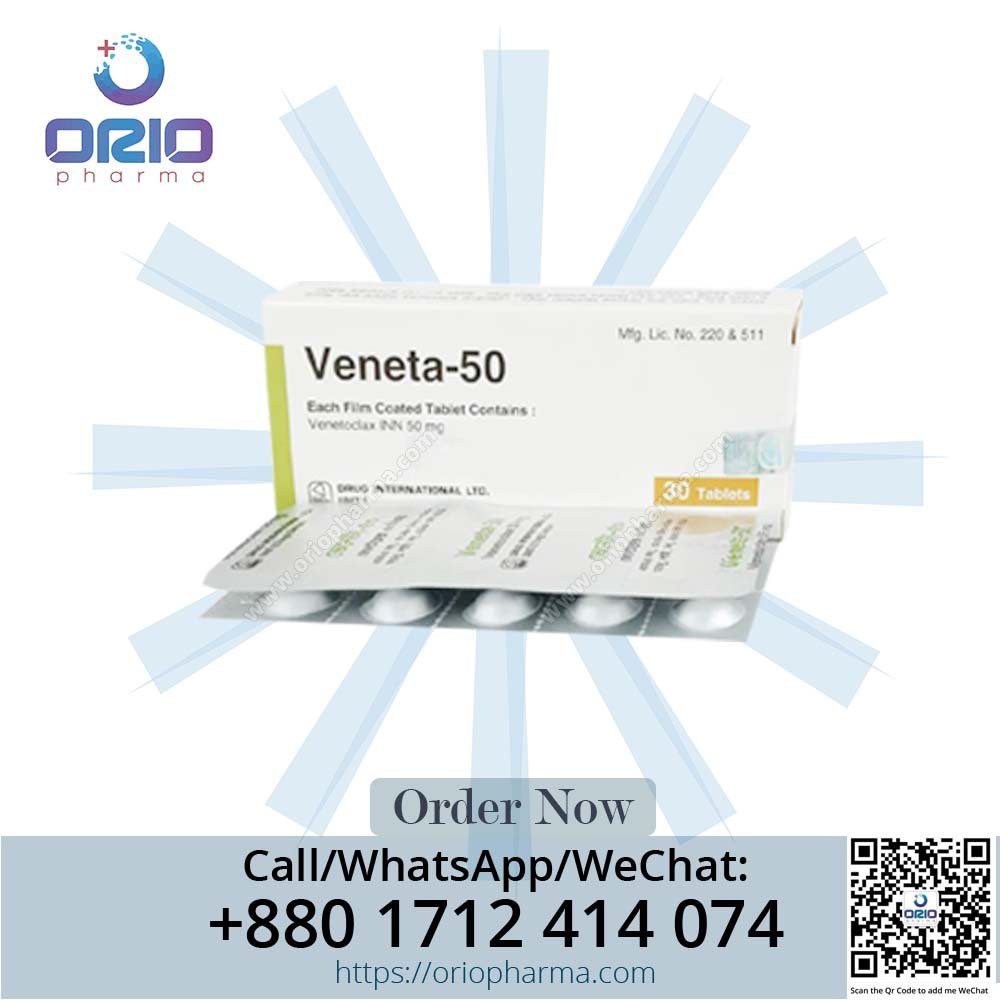
Sourcing Venetoclax 100 mg from Bangladeshi Manufacturers
Several established Bangladeshi pharmaceutical manufacturers produce venetoclax 100 mg tablets under distinct brand names. Veneta is manufactured by Drug International Ltd., while Ventoxen is produced by Everest Pharmaceuticals Ltd.—notably launched on July 1, 2020, as a generic alternative supporting CLL and AML treatment access. Ventonix and Venclax are both manufactured by Beacon Pharmaceuticals Ltd., and Ventax is produced by Ziska Pharmaceuticals Ltd.
Each of these manufacturers maintains production standards consistent with Bangladesh’s national pharmaceutical regulatory framework, supporting export-grade quality suitable for international distribution. As a Bangladeshi pharmaceutical supplier, we facilitate export of these brands to healthcare institutions and distributors in the United States, alongside supply channels serving Pakistan and Bangladesh. This multi-market export capability allows procurement teams to source consistent, quality-manufactured venetoclax formulations from a single regional supply base. Buyers evaluating oncology portfolios may also find related supply options such as our carboplatin chemotherapy listings relevant to broader treatment planning.
Ordering Information for Pharmacies and Distributors
Pharmacies, distributors, and healthcare institutions seeking to procure venetoclax 100 mg tablets—Veneta, Ventoxen, Ventonix, Ventax, or Venclax—are invited to contact our team directly for current availability and pricing details. Our B2B inquiry process is structured to support both single-order and recurring wholesale procurement needs, with documentation support for export compliance to the United States, Pakistan, and Bangladesh.
To initiate an inquiry, buyers can submit product and volume requirements through our contact channels, after which our team will provide manufacturer-specific availability, packaging details, and lead times. Bulk order support is available for institutional buyers requiring consistent supply chains for oncology treatment programs. We encourage prospective partners to reach out with specific sourcing requirements so that our team can provide tailored, compliant procurement solutions aligned with each buyer’s regulatory and operational needs.
Frequently Asked Questions
What cancer is venetoclax used for?
Venetoclax is approved for adults with chronic lymphocytic leukemia (CLL) or small lymphocytic lymphoma (SLL), either alone or combined with acalabrutinib, and for newly-diagnosed acute myeloid leukemia (AML) in combination with agents such as azacitidine, decitabine, or low-dose cytarabine.
What is venetoclax 100 mg?
Venetoclax 100 mg is an oral tablet formulation of a BCL-2 inhibitor used in oncology treatment protocols for CLL, SLL, and AML in adults aged 18 years and older.
It is one of three available tablet strengths, alongside 10 mg and 50 mg, designed to support physician-directed treatment planning.
What should I avoid while taking venetoclax?
Because venetoclax is metabolized through the CYP3A4 pathway, patients should avoid combining it with substances or medications that affect this pathway unless cleared by their physician.
All interacting medications and supplements should be reviewed with a healthcare provider, and patients should follow monitoring guidance related to tumor lysis syndrome and infection risk throughout treatment.
What are the common side effects of venetoclax?
Commonly reported side effects include nausea, diarrhea, vomiting, fatigue, constipation, and musculoskeletal pain.
Hematologic effects such as neutropenia, thrombocytopenia, and anemia are also frequently observed, along with upper respiratory tract infection and peripheral edema; patients should discuss the full safety profile with their healthcare provider.
Which Bangladeshi brands of venetoclax 100 mg are available for export?
Bangladeshi-manufactured venetoclax 100 mg brands available for export include Veneta, Ventoxen, Ventonix, Ventax, and Venclax.
These are produced by manufacturers such as Drug International Ltd., Everest Pharmaceuticals Ltd., Beacon Pharmaceuticals Ltd., and Ziska Pharmaceuticals Ltd., and are supplied to the United States, Pakistan, and Bangladesh.
How can pharmacies or distributors order venetoclax in bulk?
Pharmacies, distributors, and healthcare institutions can contact the supplier’s team directly to inquire about current availability, packaging, and lead times for venetoclax 100 mg brands.
The B2B inquiry process supports both single orders and recurring wholesale procurement, with documentation assistance for export compliance to relevant markets.
- 1. www.ventoxen.com
- 2. go.drugbank.com
- 3. www.ema.europa.eu
- 4. www.drugs.com
- 5. www.accessdata.fda.gov
- 6. www.fda.gov
- 7. www.accessdata.fda.gov
- 8. www.accessdata.fda.gov
Access This Medicine Through Orio Pharma
We are a specialist oncology medicine supplier delivering to patients, pharmacies, hospitals, and distributors worldwide. Contact us for availability and sourcing support.
We do not publish prices online. All pricing is provided directly by our specialist supply team on request.
Medical Information Notice: This content is for informational purposes only and is based on official pharmaceutical product documentation. It does not constitute medical advice. Patients should consult their doctor or pharmacist before taking any medication.
Regulatory Disclaimer: Sourcing and distribution are subject to regional import regulations, quotas, and verified medical prescriptions where applicable. Pricing and availability are subject to change without notice.
Content Currency: This article was last reviewed and updated in August 2026. Regulatory approval statuses and product availability are subject to change; readers are advised to consult official regulatory databases for the most current information.