
Last Updated: July 2026
Published by: Orio Pharma — a specialist oncology medicine supplier serving patients, pharmacies, and distributors worldwide.
Medical Review: Reviewed by Dr. Nusrat Jahan, MBBS, MD (Medical Oncology)
Content Basis: This article is based on official prescribing information, product monographs, and regulatory product documentation from the FDA, EMA, and DGDA (Directorate General of Drug Administration, Bangladesh).
Sources: FDA prescribing information (accessdata.fda.gov), DrugBank, Carboplatin monograph (drugs.com)
Key Takeaways
Carboplatin is a platinum-based alkylating agent used across multiple treatment lines for ovarian carcinoma — including primary, secondary, recurrent, and advanced disease — and is also used in guideline-directed regimens for other malignancies, including cervical cancer, outside its approved labelling.
Its mechanism of action involves forming crosslinks within cancer cell DNA, disrupting the ability of malignant cells to divide — a cytotoxic profile that supports both single-agent use and combination regimens such as carboplatin plus cyclophosphamide.
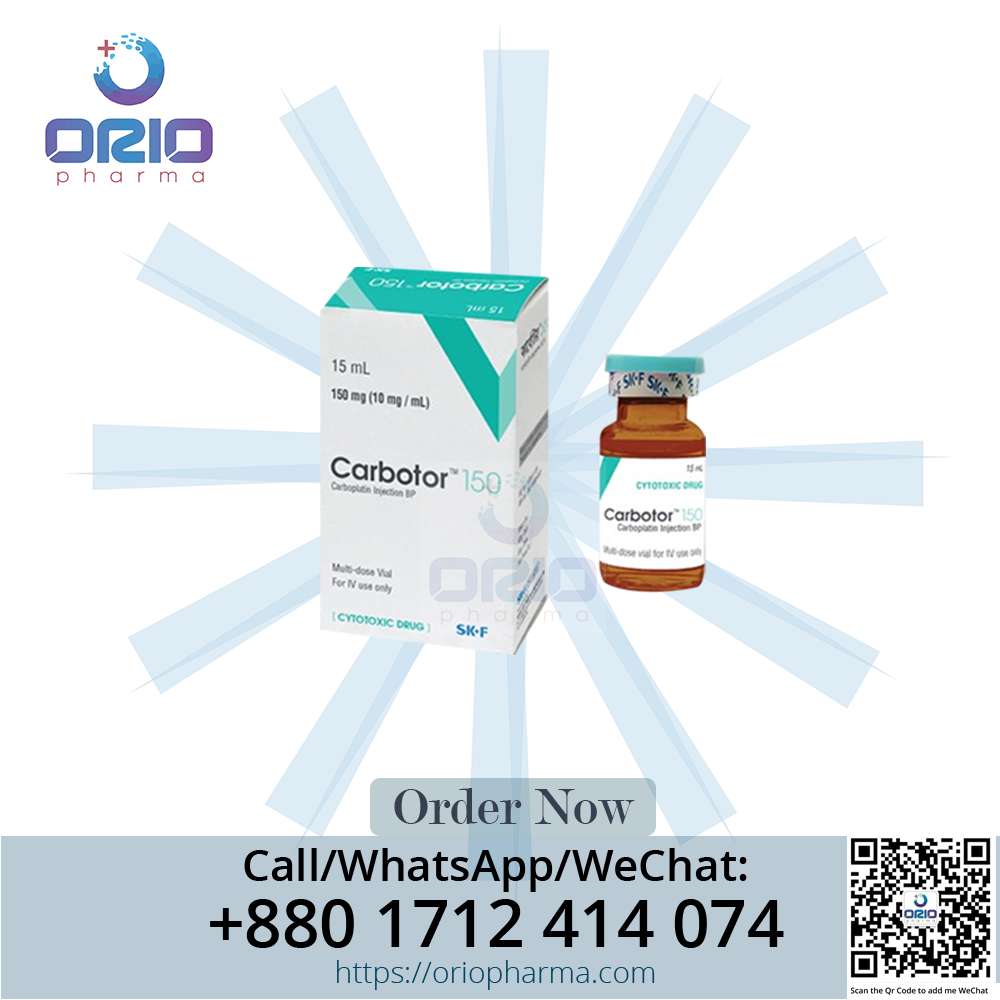
Carbotor, manufactured by Eskayef Pharmaceuticals Ltd in Bangladesh, is available in a range of intravenous vial sizes to accommodate diverse oncology unit requirements, from outpatient infusion settings to high-throughput hospital departments.
Retreatment must not occur until at least four weeks after the previous course and only following confirmed hematologic recovery, making treatment-interval planning a critical consideration for both clinical teams and procurement schedulers.
Multi-dose vials remain stable for up to 14 days at 25°C after multiple needle entries, supporting efficient vial utilization and waste reduction in oncology pharmacy settings.
Myelosuppression — neutropenia, thrombocytopenia, and anemia — is the principal dose-limiting toxicity, alongside nausea and vomiting; all monitoring and management must be directed by the treating physician per the official prescribing information.
What Is Carboplatin Used For?
Carboplatin is a platinum-based cytotoxic chemotherapy agent classified among the alkylating agents, used primarily in oncology for the management of ovarian carcinoma across multiple treatment lines. Its approved indications include the primary and secondary treatment of ovarian carcinoma, making it relevant from initial diagnosis through subsequent therapeutic lines.
In recurrent and advanced disease, carboplatin is indicated for recurrent ovarian cancer and for advanced ovarian cancer in combination with cyclophosphamide — a regimen that has remained a reference point in gynecologic oncology through decades of clinical evidence. Beyond ovarian malignancies, carboplatin is widely used in guideline-directed regimens for other tumour types — including cervical cancer — reflecting broad cytotoxic utility, though these uses fall outside the approved US labelling.
For B2B procurement professionals supplying oncology units, hospitals, and cancer treatment centers, carboplatin is a foundational chemotherapy agent with consistent clinical demand. Its role in both first-line and salvage settings means procurement teams must maintain reliable supply continuity to support uninterrupted patient care. Carbotor is the Bangladeshi-manufactured brand of carboplatin available through our supply network, supporting oncology programs across international markets with documented quality standards.
How Carboplatin Works: Mechanism of Action
Carboplatin belongs to the class of platinum-containing compounds, a subgroup of alkylating agents within cytotoxic chemotherapy. Its mechanism centers on interfering with the replication machinery of cancer cells — specifically by forming crosslinks within DNA strands, which disrupts the ability of malignant cells to divide and proliferate.
By stopping or slowing the growth of cancer cells, carboplatin exerts a cytotoxic effect on rapidly dividing tumor tissue. This DNA-damaging action is characteristic of platinum-based compounds and underlies carboplatin’s clinical effectiveness across ovarian carcinoma stages and other malignancies, as demonstrated in randomized controlled trials over three decades of clinical use.
For oncology procurement teams and hospital formulary committees, understanding this mechanism matters when evaluating combination regimens. Carboplatin is frequently paired with other cytotoxic agents — such as cyclophosphamide in advanced ovarian cancer — where its platinum-based activity complements agents with differing mechanisms. This mechanistic profile supports its continued role as a cornerstone agent in cancer treatment protocols worldwide, consistent with evidence-based guidance from bodies such as the National Comprehensive Cancer Network (NCCN) and the European Society for Medical Oncology (ESMO). For broader context on how targeted and cytotoxic therapies intersect in modern oncology, see our article on the role of targeted therapy in cancer treatment.
Is Carboplatin a Strong Chemotherapy Agent?
Carboplatin is classified as an alkylating agent and cytotoxic chemotherapy — categories that define some of the most clinically significant drugs in oncology. It is a well-established standard-of-care agent with over 30 years of clinical use across primary, recurrent, and advanced cancer settings, a track record that speaks to its potency and reliability as documented in the peer-reviewed literature.
As a platinum-based compound, carboplatin acts directly on cancer cell DNA, making it a pharmacologically active agent with meaningful cytotoxic impact. It is used across both early-stage and advanced ovarian carcinoma, as well as in combination regimens for recurrent disease, demonstrating relevance throughout the full treatment continuum with established efficacy endpoints in clinical trials.
Compared with other chemotherapy classes, alkylating agents such as carboplatin are considered high-activity cytotoxics. Their use requires careful clinical oversight, appropriate patient selection, and monitoring of hematologic parameters — all of which underscore the seriousness with which oncologists approach carboplatin-based regimens under established clinical protocols. For procurement professionals, this clinical weight translates into sustained institutional demand, particularly in oncology centers managing ovarian carcinoma and related malignancies. Carboplatin for ovarian cancer remains one of the most consistently procured cytotoxic agents in hospital pharmacy settings worldwide.
Available Strengths and Formulations
Carbotor (Eskayef Pharmaceuticals Ltd) is available in multiple intravenous formulations to accommodate varying clinical requirements across oncology settings. The available presentations include:
- 10 mg/mL intravenous solution in 50 mg, 150 mg, 450 mg, and 600 mg vials
- 20 mg/2 mL injection
- 80 mg/8 mL injection
- 150 mg for injection
- 500 mg/50 mL injection
This range of vial sizes supports flexible procurement for both low-volume outpatient infusion units and high-throughput hospital oncology departments. All formulations are administered exclusively via the intravenous route and must be appropriately diluted prior to administration according to institutional protocols.
Specific dosing, dilution protocols, and vial selection are determined by the treating physician in accordance with the official prescribing information and institutional guidelines. Procurement teams should confirm vial-size requirements with their clinical counterparts when placing orders to ensure the correct formulations are stocked for their patient population and infusion protocols.
Key Clinical and Administration Considerations
Carboplatin must be administered exclusively by the intravenous route following appropriate dilution. This is a non-negotiable requirement that oncology pharmacy and nursing teams must observe in every clinical setting to protect patient safety and preserve therapeutic efficacy.
A critical scheduling consideration is that therapy should not be repeated until a minimum of four weeks has elapsed since the previous carboplatin course, and only after hematologic recovery has been confirmed — specifically, neutrophil and platelet counts must reach defined recovery thresholds before retreatment begins. This interval is essential for patient safety and must be built into both treatment planning and supply scheduling, consistent with established oncology practice.
The Calvert formula is recognized as a method for individualizing patient dosing, allowing clinicians to account for renal function when determining appropriate treatment parameters. This evidence-based approach has been validated in clinical practice and published in the peer-reviewed oncology literature. Specific dosing decisions — including any adjustments for patients with risk factors or those aged 65 and over — remain the responsibility of the treating physician under the official prescribing information.
From a pharmacy-management perspective, multi-dose vials of carboplatin maintain microbial, chemical, and physical stability for up to 14 days at 25°C following multiple needle entries. This stability profile supports efficient vial utilization in busy oncology units and is a relevant factor in pharmacy procurement and waste-reduction planning, contributing to cost-effective oncology service delivery.
Side Effects and Safety Profile
As a platinum-based cytotoxic agent, carboplatin carries a well-characterized adverse-reaction profile that clinical and procurement teams should understand when planning treatment and monitoring. The reactions below are drawn from the official prescribing information and should not be read as a complete list.
- Myelosuppression (dose-limiting): bone-marrow suppression is the principal dose-limiting toxicity, presenting as neutropenia, thrombocytopenia, anemia, and leukopenia. It is the reason retreatment requires confirmed hematologic recovery and a minimum four-week interval between courses.
- Gastrointestinal effects: nausea and vomiting are common and are typically managed with supportive antiemetic care.
- Renal and electrolyte effects: nephrotoxicity and electrolyte disturbances (including reductions in serum magnesium, potassium, sodium, and calcium) may occur and warrant laboratory monitoring.
- Neurologic effects: peripheral neuropathy and, less commonly, ototoxicity have been reported.
- Hepatic effects: abnormalities in liver function tests may be observed during therapy.
- Hypersensitivity: allergic reactions to carboplatin can occur and require prompt clinical evaluation.
Because myelosuppression is cumulative and dose-limiting, blood-count monitoring is central to safe use, and treatment intervals are governed by hematologic recovery rather than a fixed calendar. All assessment of adverse reactions, dose adjustment, and supportive care must be directed by the treating physician in accordance with the official prescribing information. Patients should consult their doctor or healthcare professional before starting therapy and should promptly report any new or worsening symptoms.
Regulatory Standing and Market Approvals
Carboplatin holds FDA approval, establishing its regulatory credibility as a chemotherapy agent within international oncology markets. This approval status is a key reference point for procurement teams and hospital formulary committees evaluating the suitability of carboplatin-based products for institutional use, providing assurance of manufacturing-quality and clinical-evidence standards.
For procurement teams operating in the Middle East — including markets such as Saudi Arabia, the UAE, and Qatar — regulatory documentation requirements typically include evidence of originating-country approvals, certificates of analysis, and manufacturing-compliance records. Carbotor is manufactured by Eskayef Pharmaceuticals Ltd in Bangladesh, and the relevant documentation to support import registration and procurement compliance can be coordinated through our supply team upon request.
Buyers are advised to verify specific in-country registration requirements with their local regulatory authority — such as the Saudi Food and Drug Authority (SFDA) — as market-authorization pathways vary across jurisdictions. Our team is experienced in supporting international procurement with the necessary documentation packages for Bangladeshi-manufactured pharmaceutical products, helping ensure compliance with destination-country requirements.
Sourcing Carbotor: Our B2B Supply Offering
We are a Bangladeshi pharmaceutical supplier specializing in the international distribution of Bangladeshi-manufactured oncology products. Carbotor, produced by Eskayef Pharmaceuticals Ltd in Bangladesh, is available through our supply network for B2B buyers across international markets, with particular focus on the Middle East.
Our target procurement partners include hospital pharmacy departments, oncology-focused distributors, international wholesalers, and healthcare group purchasing organizations. We understand the documentation, lead-time, and quality-assurance requirements that institutional buyers demand, and we structure supply arrangements to meet those standards with full traceability and compliance documentation.
For organizations building reliable oncology supply chains, carboplatin is a high-priority, consistently demanded agent. We offer availability inquiries, product-documentation support, and supply-planning assistance for Carbotor across multiple vial configurations. Whether you are establishing a new procurement relationship or seeking an alternative source for an existing carboplatin program, we invite you to contact us to discuss availability and commercial terms. Our supply offering is grounded in Bangladeshi manufacturing origin.
Contact Us to Inquire About Carboplatin Supply
If you are a hospital procurement manager, oncology distributor, or international pharmaceutical wholesaler seeking a reliable source of carboplatin, we are ready to assist. Carbotor — a Bangladeshi-manufactured carboplatin intravenous solution by Eskayef Pharmaceuticals Ltd — is available through our B2B supply network for international markets including the Middle East.
Contact us to inquire about product availability, vial configurations, and regulatory documentation. Our team is equipped to support your procurement process from initial inquiry through to order fulfillment with professional service standards. Reach out today to discuss how we can support your oncology supply requirements with reliable, quality-assured pharmaceutical products.
Frequently Asked Questions
Is carboplatin a strong chemotherapy agent?
Carboplatin is classified as an alkylating agent and cytotoxic chemotherapy, categories that represent some of the most clinically significant drugs in oncology. As a platinum-based compound, it acts directly on cancer cell DNA and is considered a high-activity cytotoxic requiring careful clinical oversight and hematologic monitoring. Its decades-long use as a standard-of-care agent across primary, recurrent, and advanced cancer settings reflects both its potency and its established clinical reliability.
What is carboplatin used for?
Carboplatin is used primarily for the treatment of ovarian carcinoma, with approved indications spanning primary and secondary treatment, recurrent ovarian cancer, and advanced ovarian cancer in combination with cyclophosphamide. It is also used in guideline-directed regimens for cervical cancer and other tumour types, reflecting its broad cytotoxic utility, although those uses sit outside the approved US labelling. This wide indication profile makes it one of the most consistently demanded agents in oncology settings worldwide.
What stage of ovarian cancer is carboplatin used for?
Carboplatin is used across multiple stages of ovarian carcinoma, from initial diagnosis through advanced and recurrent disease. It is indicated for primary and secondary treatment, meaning it is relevant at first-line therapy and in subsequent treatment lines, as well as specifically for recurrent and advanced ovarian cancer. This breadth of use across the full treatment continuum makes it a foundational agent in gynecologic oncology.
What are the main side effects of carboplatin?
The principal dose-limiting toxicity of carboplatin is myelosuppression — neutropenia, thrombocytopenia, and anemia — which is why retreatment cannot proceed until blood counts recover to defined thresholds and at least four weeks have passed. Other reported reactions include nausea and vomiting, nephrotoxicity and electrolyte disturbances, peripheral neuropathy, ototoxicity, liver-function abnormalities, and hypersensitivity reactions. All side-effect monitoring and management should be directed by the treating physician in accordance with the official prescribing information.
How can our hospital procurement team source Carbotor carboplatin?
Carbotor, the Bangladeshi-manufactured carboplatin intravenous solution produced by Eskayef Pharmaceuticals Ltd, is available through our B2B supply network for international markets including the Middle East. We support hospital pharmacy departments, oncology distributors, and international wholesalers with availability inquiries, vial-configuration options, and regulatory documentation. Contact our team directly to discuss supply arrangements, lead times, and commercial terms.
What documentation is available to support import registration for Carbotor?
Carbotor is manufactured in Bangladesh by Eskayef Pharmaceuticals Ltd and carries FDA approval as a key regulatory reference point for institutional and formulary evaluation. Documentation packages — including certificates of analysis, manufacturing-compliance records, and originating-country approval evidence — can be coordinated through our supply team upon request. Buyers are advised to confirm specific in-country registration requirements with their local regulatory authority, such as the SFDA, as market-authorization pathways vary by jurisdiction.
- U.S. FDA — Carboplatin prescribing information (accessdata.fda.gov)
- Carboplatin — AHFS/Drugs.com professional monograph
- DrugBank — Carboplatin (DB00958)
- Saudi Food and Drug Authority (SFDA) — Registered drug list
Access This Medicine Through Orio Pharma
We are a specialist oncology medicine supplier delivering to patients, pharmacies, hospitals, and distributors worldwide. Contact us for availability and sourcing support.
We do not publish prices online. All pricing is provided directly by our specialist supply team on request.
Medical Information Notice: This content is for informational purposes only and is based on official pharmaceutical product documentation. It does not constitute medical advice. Patients should consult their doctor or pharmacist before taking any medication.
Regulatory Disclaimer: Sourcing and distribution are subject to regional import regulations, quotas, and verified medical prescriptions where applicable. Availability is subject to change without notice.
Content Currency: This article was last reviewed and updated in July 2026. Regulatory approval statuses and product availability are subject to change; readers are advised to consult official regulatory databases for the most current information.