Last Updated: July 2026
Published by: Orio Pharma — a Bangladesh-based oncology medicine exporter serving hospitals, pharmacies, and distributors across Lebanon and worldwide.
Medical Review: Reviewed by Dr. Farhan Hossain, MBBS, MD (Oncology)
Content Basis: This article is based on official prescribing information and regulatory product documentation from the U.S. FDA and the European Medicines Agency (EMA).
For patients being treated for EGFR mutation-positive non-small cell lung cancer (NSCLC) in Beirut and across Lebanon, uninterrupted access to targeted therapy is essential to treatment outcomes. Yet hospital pharmacies and oncology units in Lebanon frequently face supply pressure for high-cost targeted agents such as osimertinib, where local shortages and constrained procurement budgets can threaten continuity of care.
Orio Pharma is a Bangladesh-based pharmaceutical exporter that acts as a reliable supply bridge for oncology centres, hospital pharmacies, and licensed distributors in Lebanon. This guide provides a clinical and procurement overview of Osimert 80 mg (Osimertinib) — manufactured by Everest Pharmaceuticals Ltd. — covering its approved indications, mechanism of action, available strengths, safety profile, and how institutional buyers in Lebanon can source it through established B2B channels. We do not publish prices; all commercial terms are provided directly to procurement teams on request.
Key Takeaways
- Osimert (osimertinib) is a third-generation, oral, irreversible EGFR tyrosine kinase inhibitor used to treat EGFR mutation-positive non-small cell lung cancer (NSCLC) across multiple disease settings.
- It is approved across four distinct indications, spanning first-line metastatic disease, T790M resistance-mutation disease, adjuvant treatment after surgical resection, and stage III unresectable disease following chemoradiation.
- Osimertinib works by irreversibly binding the cysteine-797 residue in the EGFR kinase domain, inhibiting both sensitising EGFR mutations and the T790M resistance mutation that limits earlier-generation EGFR-TKIs.
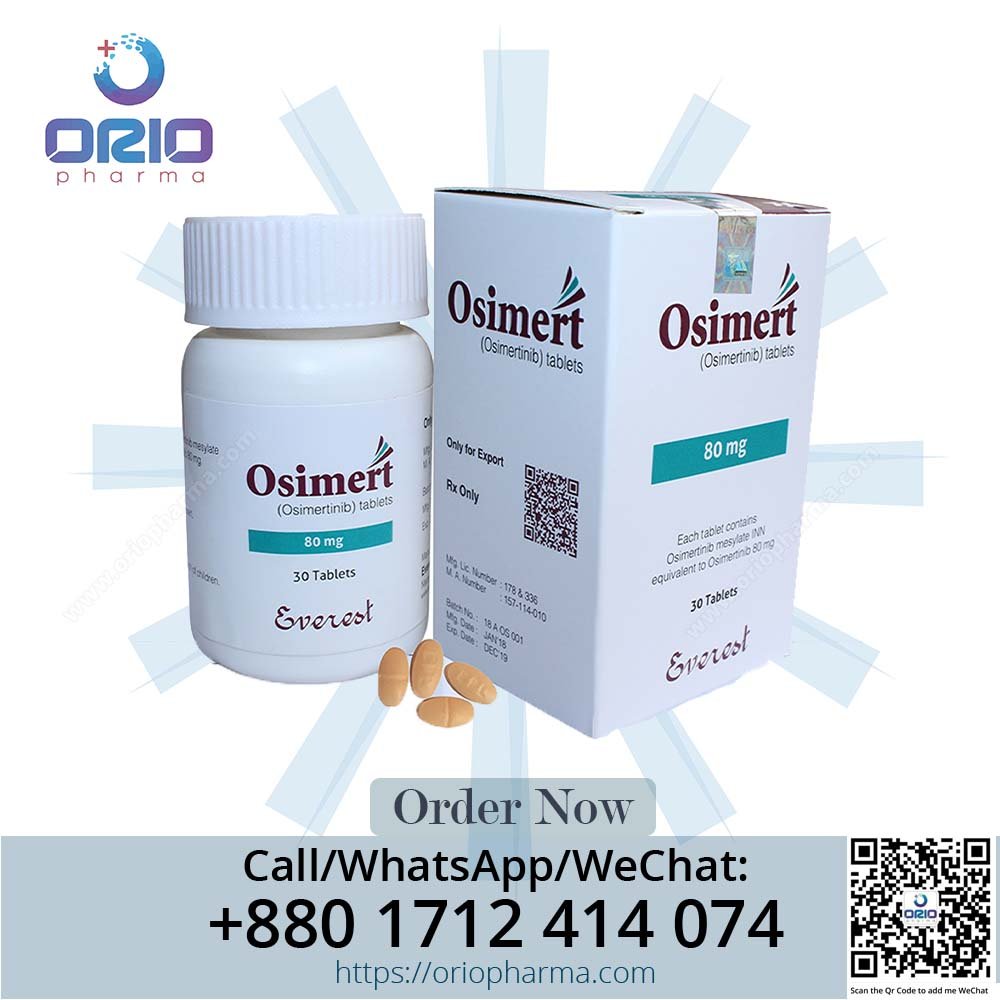
- Osimert is manufactured by Everest Pharmaceuticals Ltd. in Bangladesh and is available as oral tablets in two strengths — 40 mg and 80 mg.
- Key adverse reactions include diarrhoea, rash, dry skin, nail toxicity, and stomatitis, with serious risks including interstitial lung disease/pneumonitis and QTc interval prolongation that require clinical monitoring.
- For hospital pharmacies and oncology procurement teams in Lebanon, Osimert offers a Bangladeshi-manufactured generic option accessible through direct B2B procurement and named-patient supply channels.
What Is Osimert 80 mg (Osimertinib)?
Osimert is a brand of osimertinib, a third-generation, oral, irreversible EGFR tyrosine kinase inhibitor (TKI) indicated for the treatment of EGFR mutation-positive non-small cell lung cancer (NSCLC). It is pharmacologically distinct from earlier-generation EGFR-TKIs, including first-generation reversible inhibitors such as gefitinib and erlotinib, and second-generation irreversible inhibitors such as afatinib and dacomitinib. Osimertinib was specifically engineered to address the resistance mechanisms that limit the durability of prior-generation agents.
Osimert is manufactured by Everest Pharmaceuticals Ltd., a Bangladeshi pharmaceutical manufacturer with established production capabilities in the oncology generics segment, and is available in two oral tablet strengths — 40 mg and 80 mg. For oncology procurement professionals in Lebanon evaluating targeted-therapy supply chains, Osimert represents a Bangladeshi-manufactured generic option within the osimertinib therapeutic class, backed by full batch documentation for institutional review.
Clinical Context: The Evolution of EGFR-TKI Therapy
Third-generation EGFR-TKIs like osimertinib represent a significant advance in precision oncology. First-generation agents demonstrated initial efficacy in EGFR-mutant NSCLC, but acquired resistance through the T790M mutation emerged as a major clinical challenge. Osimertinib’s selective dual inhibition of both sensitising EGFR mutations and T790M has reshaped treatment across multiple disease settings, supported by pivotal trials including FLAURA, ADAURA, AURA3, and LAURA.
Approved Indications: EGFR-Mutant NSCLC
Osimertinib is approved across four distinct clinical indications in EGFR mutation-positive NSCLC, reflecting its utility at multiple stages of disease. Each approval is supported by Phase III clinical trial data demonstrating meaningful improvements in progression-free and/or overall survival:
- First-line metastatic NSCLC
- First-line treatment of adult patients with locally advanced or metastatic NSCLC whose tumours harbour EGFR exon 19 deletions or exon 21 (L858R) substitution mutations — the two most prevalent sensitising EGFR mutations.
- T790M mutation-positive metastatic NSCLC
- Treatment of adult patients with locally advanced or metastatic EGFR T790M mutation-positive NSCLC that has progressed on prior EGFR-TKI therapy. The T790M substitution is the most common mechanism of acquired resistance to first- and second-generation EGFR-TKIs.
- Adjuvant treatment after tumour resection
- Adjuvant therapy following complete tumour resection in patients with early-stage EGFR-mutant NSCLC, addressing the risk of disease recurrence in the curative-intent setting.
- Stage III unresectable NSCLC after chemoradiation
- Treatment of locally advanced, unresectable (stage III) NSCLC in patients whose disease has not progressed during or after platinum-based chemoradiation and whose tumours carry EGFR exon 19 deletions or exon 21 (L858R) mutations.
Evidence-Based Practice Note
Molecular testing to confirm EGFR mutation status through validated assays (tissue biopsy, liquid biopsy, or cytology specimens) is a prerequisite for patient selection across all indications. Osimertinib is not effective in EGFR wild-type NSCLC, so confirmation of the driver mutation is essential before treatment is initiated.
Mechanism of Action: How Osimertinib Works
Osimertinib functions as a selective, irreversible inhibitor of the epidermal growth factor receptor. Its distinguishing feature is the ability to inhibit both the sensitising EGFR mutation — which confers TKI sensitivity — and the EGFR T790M resistance mutation, which is the primary driver of acquired resistance to first- and second-generation agents.
Molecular Binding and Irreversible Inhibition
The irreversibility of osimertinib’s activity is achieved through covalent bond formation with the cysteine-797 residue in the ATP-binding pocket of the EGFR kinase domain. By forming this covalent bond, osimertinib durably inactivates the receptor, preventing the downstream signalling cascades that drive tumour cell proliferation and survival. This results in sustained target inhibition that persists beyond the plasma half-life of the drug.
Selectivity and Wild-Type EGFR Sparing
A key pharmacological advantage of osimertinib is its high selectivity for EGFR-activating and T790M resistance mutations over wild-type EGFR. This reduces inhibition of wild-type EGFR in normal tissues, which is associated with improved tolerability compared with earlier-generation EGFR-TKIs. Osimertinib is metabolised primarily via the CYP3A4 pathway, and its two pharmacologically active metabolites (AZ5104 and AZ7550) each circulate at roughly 10% of parent-drug concentration.
Available Strengths & Formulations
Osimert is supplied by Everest Pharmaceuticals Ltd. as oral film-coated tablets in two strengths — 40 mg and 80 mg — giving prescribing oncologists options suited to individual patient management and tolerability. Both strengths are formulated for oral administration and may be taken with or without food.
Product Specifications
| Brand | Osimert |
| Active Ingredient | Osimertinib |
| Manufacturer | Everest Pharmaceuticals Ltd., Bangladesh |
| Available Strengths | 40 mg and 80 mg oral tablets |
| Dosage Form | Oral film-coated tablet |
| Storage | Store at controlled room temperature; protect from moisture |
Tablets should be swallowed whole and not crushed, divided, or chewed. The 80 mg tablet is the strength most commonly referenced in procurement inquiries for this molecule, while the availability of the 40 mg strength supports dose management as directed by the treating physician. Prescribing, dose selection, and any dose modification are clinical decisions that must be made by the treating oncologist in accordance with the official prescribing information.
Safety Profile: Side Effects & Key Adverse Reactions
Osimertinib carries a defined safety profile that oncology and procurement teams should understand when evaluating this agent for formulary inclusion or patient access. The safety data below is derived from the pooled clinical trial programme, representing exposure across thousands of patients.
Common Adverse Reactions
The most frequently reported adverse reactions in clinical trials include:
- Diarrhoea (reported in around 58% of patients), the most common gastrointestinal effect, though generally less severe than with first-generation EGFR-TKIs.
- Rash (around 58%) and other dermatologic effects reflecting on-target EGFR inhibition in the skin.
- Dry skin, a common cutaneous reaction associated with EGFR inhibition.
- Nail toxicity, including paronychia (around 35%).
- Stomatitis and other mucosal effects, alongside reduced appetite.
- Haematologic changes such as lymphopenia, leukopenia, thrombocytopenia, and neutropenia, which are usually manageable with regular blood-count monitoring.
- Musculoskeletal pain and cough, typically mild to moderate.
Serious Adverse Reactions Requiring Clinical Vigilance
Interstitial lung disease (ILD)/pneumonitis: A potentially life-threatening complication. Any new or worsening respiratory symptoms — dyspnoea, cough, or fever — require prompt evaluation, and confirmed ILD requires permanent discontinuation of therapy.
QTc interval prolongation: Electrocardiographic monitoring is warranted, particularly in patients with cardiac risk factors, electrolyte abnormalities, or concomitant QT-prolonging medicines. Therapy may need to be withheld if QTc exceeds established thresholds on repeat assessment.
Cardiomyopathy and keratitis have also been reported and warrant baseline and periodic cardiac assessment and prompt ophthalmologic referral for ocular symptoms, respectively.
Drug Interactions and Special Populations
Because osimertinib is metabolised via CYP3A4, concomitant use with strong CYP3A4 inducers should be avoided, as they may reduce osimertinib plasma concentrations. Osimertinib can cause fetal harm, so appropriate contraceptive counselling is required for patients of reproductive potential, and breastfeeding is not recommended during treatment. Patients should always consult their treating physician or healthcare professional before starting, stopping, or changing any medication, and should report any new or worsening symptoms promptly.
Regulatory Status: FDA, EMA & Lebanon Market Access
Osimertinib received initial approval from the U.S. Food and Drug Administration (FDA) in 2015 for metastatic EGFR T790M mutation-positive NSCLC — the first third-generation EGFR-TKI to reach a major market. Subsequent FDA approvals expanded its use to first-line metastatic NSCLC, adjuvant treatment following tumour resection, and stage III unresectable NSCLC following chemoradiation, each supported by pivotal Phase III trials.
The European Medicines Agency (EMA) granted marketing authorisation for osimertinib in 2015, with label expansions paralleling the FDA timeline. This dual FDA–EMA approval, backed by robust clinical trial data, provides a strong regulatory pedigree that hospital formulary committees can use as a confidence signal when evaluating generic osimertinib.
Market Access Context for Lebanon
In Lebanon, importation and hospital procurement of oncology medicines are overseen by the Ministry of Public Health (MoPH). Institutional buyers typically access internationally approved oncology products through named-patient supply, hospital tender mechanisms, and direct B2B procurement agreements. The established FDA and EMA approval status of the reference molecule supports procurement evaluation, though buyers should always confirm applicable import and registration requirements with their institution’s regulatory affairs function.
Sourcing Osimert for Hospitals & Pharmacies in Lebanon
Orio Pharma is a Bangladesh-based pharmaceutical exporter specialising in B2B oncology procurement for hospital pharmacies, oncology centres, and licensed distributors in Beirut and across Lebanon. We supply Osimert — osimertinib 40 mg and 80 mg oral tablets, manufactured by Everest Pharmaceuticals Ltd. — providing Lebanese institutions with a quality-assured generic option through established international channels.
Our Institutional Procurement Support
- Oncology departments seeking to expand formulary access to targeted therapies
- Hospital pharmacy managers responsible for specialty oncology procurement
- Regional distributors serving multiple healthcare facilities in Lebanon
- Tender management teams evaluating competitive supply of EGFR-TKIs
- Named-patient supply coordinators facilitating urgent patient access
Documentation We Can Provide
- Product availability information and lead-time estimates
- Certificate of Analysis (CoA) and batch documentation
- Manufacturing licences and GMP certificates
- Product specifications and stability data
- Documentation support relevant to Lebanese MoPH import requirements
- Commercial invoices and shipping documentation
Because osimertinib is typically administered continuously until disease progression, supply-chain reliability is a critical factor in supplier selection. We do not publish pricing publicly; all pricing and availability is provided through direct B2B inquiry, tailored to your institution’s requirements and order volume. Contact our team to confirm current availability of Osimert 40 mg and 80 mg tablets for delivery to Lebanon.
Frequently Asked Questions
What is Osimert 80 mg used for?
Osimert 80 mg (osimertinib) is used to treat EGFR mutation-positive non-small cell lung cancer (NSCLC) across several settings: first-line metastatic disease with EGFR exon 19 deletions or exon 21 (L858R) mutations, T790M mutation-positive disease after progression on prior EGFR-TKI therapy, adjuvant treatment after complete tumour resection, and stage III unresectable disease following chemoradiation. Molecular testing to confirm EGFR mutation status is required before treatment begins.
What are the common side effects of Osimert?
Common side effects of Osimert include diarrhoea, rash, dry skin, nail toxicity, and stomatitis, along with reduced appetite and haematologic changes such as leukopenia and neutropenia. Serious reactions — including interstitial lung disease/pneumonitis and QTc interval prolongation — require prompt clinical evaluation and may necessitate dose modification or permanent discontinuation. All side-effect management should be directed by the treating physician in accordance with the official prescribing information.
Which strengths of Osimert are available?
Osimert is available as oral tablets in two strengths — 40 mg and 80 mg — manufactured by Everest Pharmaceuticals Ltd. in Bangladesh. Dose selection and any dose adjustment are clinical decisions made by the treating oncologist based on the individual patient and the official prescribing information.
Can Orio Pharma supply Osimert to hospitals and pharmacies in Lebanon?
Yes. Orio Pharma is a Bangladesh-based exporter that facilitates B2B procurement of Osimert — manufactured by Everest Pharmaceuticals Ltd. — for hospital pharmacies, oncology departments, and licensed distributors in Beirut and across Lebanon. We support named-patient supply, institutional tenders, and direct procurement agreements, with documentation relevant to Lebanese MoPH import requirements. Contact our team to discuss availability, documentation, and lead times.
How can procurement teams in Lebanon request a quotation?
We do not publish pricing publicly. All pricing and availability is provided through direct B2B inquiry, tailored to your institution’s order volume, delivery requirements, and documentation needs. Contact our team with the strength required (40 mg, 80 mg, or both), estimated quantities, and your preferred timeline, and we will respond with current availability, lead times, and terms for supply to Lebanon.
- U.S. FDA — Osimertinib (Tagrisso) Prescribing Information
- U.S. FDA — Osimertinib approval, stage III unresectable NSCLC
- European Medicines Agency — Osimertinib (Tagrisso) EPAR Risk Management Plan
Access Osimert Through Orio Pharma
We are a Bangladesh-based oncology medicine exporter supplying hospitals, pharmacies, and distributors in Lebanon and worldwide. Contact us for availability and sourcing support for Osimert 40 mg and 80 mg tablets.
We do not publish prices online. All pricing is provided directly by our specialist supply team on request.
Medical Information Notice: This content is for informational purposes only and is based on official pharmaceutical product documentation. It does not constitute medical advice. Patients should consult their doctor or pharmacist before taking any medication.
Regulatory Disclaimer: Sourcing and distribution are subject to regional import regulations, quotas, and verified medical prescriptions where applicable. Availability is subject to change without notice.
Content Currency: This article was last reviewed and updated in July 2026. Regulatory approval statuses and product availability are subject to change; readers are advised to consult official regulatory databases for the most current information.