
Last Updated: August 2026
Published by: Orio Pharma — a specialist oncology medicine supplier serving patients, pharmacies, and distributors worldwide.
Medical Review: Reviewed by Dr. Rakib Uddin Ahmed, MBBS, MD (Hematology)
Content Basis: This article is based on official prescribing information, product monographs, and regulatory product documentation from DGDA (Directorate General of Drug Administration, Bangladesh).
Sources: inceptapharma.com, tofacinix.com, drugs.com, drugs.com, pubmed.ncbi.nlm.nih.gov, accessdata.fda.gov, accessdata.fda.gov

Key Takeaways
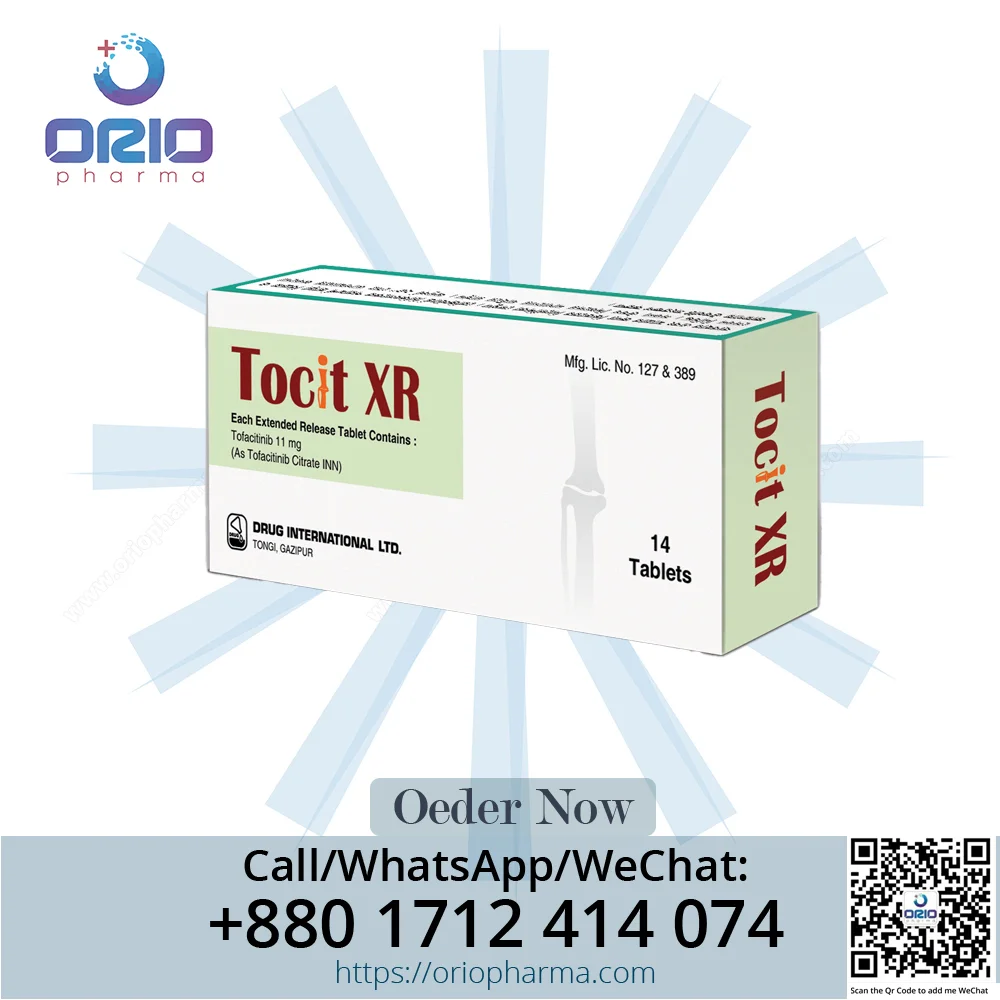
- Tofacitinib 5 mg tablets are supplied directly from Bangladeshi manufacturers under six brands: Tofacinix, Tofacent, Tocit XR, Jaknib, Arthanib, and Tofaxen.
- Tofacitinib is a Janus kinase (JAK) inhibitor and targeted synthetic DMARD approved for rheumatoid arthritis in adults with inadequate response or intolerance to methotrexate, as well as psoriatic arthritis, ulcerative colitis, and polyarticular juvenile idiopathic arthritis in patients 2 years and older.
- The drug works by blocking the JAK-STAT signaling pathway, reducing the inflammatory signaling that drives joint damage in rheumatoid arthritis.
- Available formulations include immediate-release tablets, extended-release tablets, and an oral solution, giving prescribers flexibility across indications and patient groups.
- Common side effects include respiratory infections, headache, hypertension, and elevated liver enzymes, while serious risks include infections, malignancies, cardiovascular events, and blood clots, requiring regular hematologic monitoring.
Tofacitinib 5 mg Tablets: Available Brands in Bangladesh
Tofacitinib 5 mg tablets are supplied directly from Bangladeshi pharmaceutical manufacturers, giving pharmacies, hospitals, and distributors reliable access to this Janus kinase (JAK) inhibitor for rheumatoid arthritis and related indications. As a domestic supplier network, we work exclusively with locally manufactured tofacitinib brands, ensuring consistent quality standards and uninterrupted supply chains within Bangladesh’s regulatory framework.
Six tofacitinib brands are currently available through our sourcing network: Tofacinix, Tofacent, Tocit XR, Jaknib, Arthanib, and Tofaxen. These brands are manufactured by established Bangladeshi pharmaceutical companies, including Beacon Pharmaceuticals, Incepta, Drug International, Aristopharma, and Healthcare Pharmaceuticals, among others operating under Bangladesh’s domestic drug manufacturing standards.
Each brand is produced in accordance with Good Manufacturing Practice (GMP) protocols applicable to Bangladeshi drug production, and available formulations span 5 mg and 10 mg immediate-release tablets alongside extended-release options. Because sourcing is domestic, procurement lead times and documentation processes are streamlined compared to imported alternatives. Institutional buyers seeking tofacitinib citrate 5 mg tablets, tofacitinib tablets 5mg, or extended-release variants can expect all six brands to be backed by verifiable manufacturer credentials and batch traceability, both essential for hospital and pharmacy procurement compliance in Bangladesh.
Procurement teams evaluating multiple brands should note that formulation availability can shift between production cycles. Confirming current batch status with each manufacturer, or through our sourcing desk, is a practical step before finalizing institutional orders.

What Is Tofacitinib Used For?
Tofacitinib is indicated across several immune-mediated inflammatory conditions, with rheumatoid arthritis representing its primary and most widely recognized use. Specifically, tofacitinib is approved for the treatment of rheumatoid arthritis in adults who have had an inadequate response or intolerance to methotrexate. In this population, it is typically used as part of a disease-modifying treatment strategy rather than as first-line therapy.
Beyond rheumatoid arthritis, tofacitinib is also approved for psoriatic arthritis in adults with inadequate response or intolerance to methotrexate or other conventional DMARDs. It carries an additional approved indication for moderately to severely active ulcerative colitis in adults; the original 2018 FDA approval covered inadequate response, loss of response, or intolerance to conventional therapy or a biologic agent, but this was narrowed in 2019 to only include patients with inadequate response or intolerance to TNF blockers, based on new safety data.
A further approved use extends to polyarticular course juvenile idiopathic arthritis (pcJIA) in patients aged 2 years and older, making tofacitinib one of the few JAK inhibitors with a pediatric rheumatologic indication. Across all these indications, the treating physician determines suitability based on prior treatment history, disease severity, and individual patient risk factors. Specific treatment selection and duration should always be guided by the prescribing physician in accordance with official prescribing information.
In clinical practice, rheumatologists often reserve tofacitinib for patients who have cycled through one or more conventional DMARDs without adequate disease control, reflecting its positioning within a stepwise treatment approach rather than as an initial therapy choice.
How Tofacitinib Works in Rheumatoid Arthritis
Tofacitinib belongs to the Janus kinase (JAK) inhibitor class and is classified therapeutically as a disease-modifying antirheumatic drug (DMARD). Unlike conventional synthetic DMARDs that act broadly on immune cell proliferation, tofacitinib works through a targeted intracellular mechanism.
The drug modulates the JAK-STAT signaling pathway, a key communication route that cytokines use to transmit inflammatory signals into immune cells. By inhibiting Janus kinase enzymes, tofacitinib prevents phosphorylation and subsequent activation of signal transducers and activators of transcription (STATs). This blocks downstream gene transcription involved in hematopoiesis and immune cell activation, which in rheumatoid arthritis translates into reduced inflammatory signaling that drives joint damage and systemic disease activity.
Because this mechanism is distinct from biologic DMARDs that target single cytokines extracellularly, tofacitinib is often categorized separately as a targeted synthetic DMARD. This oral small-molecule approach offers an alternative mechanism for patients who have not achieved adequate control with methotrexate alone, forming part of a broader treatment strategy determined by the prescribing rheumatologist.
This mechanistic distinction is clinically relevant for procurement and formulary teams as well: because tofacitinib is orally administered rather than injected or infused, its handling, storage, and distribution logistics differ meaningfully from biologic DMARDs, a factor institutional buyers may weigh alongside clinical considerations.

Dosage Forms and Product Specifications
Tofacitinib is manufactured in Bangladesh across multiple product specifications to accommodate varying clinical needs. Available forms include 5 mg and 10 mg immediate-release tablets, 11 mg and 22 mg extended-release (XR) tablets, and a 1 mg/mL oral solution. This range allows prescribers flexibility in selecting the appropriate formulation based on indication, patient age, and treatment phase.
Bangladeshi manufacturers supplying these strengths ensure that pharmacies and distributors have access to the full spectrum of tofacitinib formulations, from standard tablets to extended-release options and liquid formulations suited to patients with swallowing difficulties or pediatric use in polyarticular juvenile idiopathic arthritis.
Tablets should be swallowed whole and taken orally; extended-release formulations in particular must not be split, crushed, or chewed, as doing so affects the release mechanism. Beyond these administration notes, this article does not specify dosing regimens, frequency, or maximum daily amounts. All dosing decisions, including strength selection and treatment duration, must be determined by the treating physician in accordance with the official prescribing information for each brand.
For pharmacy staff advising patients, reinforcing the “swallow whole” instruction for extended-release tablets at the point of dispensing is a simple but important counseling step, since altering the tablet can compromise its intended release profile.
Side Effects and Safety Considerations
Tofacitinib carries a well-documented safety profile that requires clinical oversight throughout treatment. Commonly reported side effects include upper respiratory tract infection, nasopharyngitis, diarrhea, headache, hypertension, elevated cholesterol, herpes zoster, urinary tract infection, elevated liver enzymes, abdominal pain, nausea, and rash. These effects are generally manageable but should be monitored during routine follow-up visits.
More serious risks associated with tofacitinib include serious infections such as tuberculosis and invasive fungal or viral infections, increased all-cause mortality risk, malignancies including lymphoma, major adverse cardiovascular events (MACE), and thrombotic events such as deep vein thrombosis, pulmonary embolism, and arterial thrombosis. Gastrointestinal perforation has also been reported as a serious adverse event requiring immediate clinical attention.
Hematologic monitoring is essential during treatment. Physicians typically assess absolute neutrophil count (ANC), lymphocyte count, and hemoglobin levels at baseline and periodically thereafter. An ANC below 500 cells/mm³ indicates severe neutropenia and requires urgent clinical assessment and possible treatment interruption, and hemoglobin below 8 g/dL similarly warrants clinical reassessment. Hepatic transaminase elevations may also occur, and tofacitinib use is not recommended in patients with severe hepatic impairment. Given these risks, healthcare providers should evaluate each patient’s infection history, cardiovascular risk profile, and laboratory parameters before and during therapy, and patients should be counseled to report new symptoms promptly.
These cardiovascular and malignancy risk considerations reflect findings that prompted regulatory agencies, including the FDA, to require boxed warning language for the JAK inhibitor class; institutions should ensure their formulary documentation and patient counseling materials remain aligned with the most current prescribing information from each manufacturer.
Regulatory Status and Approval in Bangladesh
In Bangladesh, tofacitinib-containing products are regulated by the Directorate General of Drug Administration (DGDA), the national authority responsible for licensing, quality assurance, and post-market surveillance of pharmaceutical products manufactured and distributed within the country. Bangladeshi manufacturers producing tofacitinib brands such as Tofacinix, Tofacent, Tocit XR, Jaknib, Arthanib, and Tofaxen must comply with DGDA’s manufacturing licensing requirements, product registration processes, and Good Manufacturing Practice standards before these brands can be marketed domestically.
This regulatory oversight extends to labeling accuracy, batch testing, and pharmacovigilance reporting, ensuring that locally produced tofacitinib tablets meet consistent quality benchmarks for hospitals and pharmacies sourcing within Bangladesh. Buyers can verify product registration status directly through DGDA (dgda.gov.bd) as part of standard procurement due diligence.
Globally, tofacitinib as a molecule first received regulatory approval from the U.S. FDA in 2012, establishing an international precedent for JAK inhibitor use in rheumatoid arthritis. This milestone is referenced here only as regulatory background; it does not apply to Bangladesh-specific product registration, which remains governed independently by DGDA.
Institutional buyers are encouraged to request current DGDA registration numbers directly from each manufacturer as part of routine due diligence, rather than relying solely on brand reputation or prior order history.

Global Brand Context
Internationally, tofacitinib is widely recognized under its originator brand, Jaktor, which helped establish the molecule’s global reputation as a leading oral JAK inhibitor for rheumatoid arthritis and related autoimmune conditions. While this originator brand shaped early clinical adoption and physician familiarity with tofacitinib worldwide, procurement discussions in Bangladesh center on domestically manufactured brands. Understanding this global context helps buyers appreciate the therapeutic lineage behind locally available tofacitinib products without conflating international brand recognition with domestic sourcing channels.
Ordering Tofacitinib 5 mg from Bangladeshi Manufacturers
Pharmacies, hospital procurement teams, and distributors seeking tofacitinib 5 mg tablets can inquire directly about availability across our six supplied brands: Tofacinix, Tofacent, Tocit XR, Jaknib, Arthanib, and Tofaxen. All products are sourced from Bangladeshi manufacturers, with formulation options spanning 5 mg and 10 mg tablets, 11 mg and 22 mg extended-release tablets, and oral solution presentations.
Our B2B inquiry process is structured for efficiency: buyers submit product and quantity requirements, and our team confirms manufacturer availability, batch documentation, and shipping logistics. This applies not only to domestic Bangladeshi orders but also to buyers in Pakistan and India, where we facilitate cross-border availability of Bangladeshi-manufactured tofacitinib brands upon request.
For institutional buyers evaluating tofacitinib tablets 5mg price points, brand-specific availability, or bulk order timelines, our team can provide manufacturer-specific documentation to support procurement decisions. We do not publish pricing publicly, as costs vary by order volume, brand, and destination market.
Contact us directly for availability and pricing information regarding any of our six supplied tofacitinib brands. Our team responds promptly to institutional inquiries from pharmacies, clinics, and distribution partners across Bangladesh and neighboring markets.
Frequently Asked Questions
What is tofacitinib 5 mg used for?
Tofacitinib 5 mg tablets are used to treat rheumatoid arthritis in adults who have not responded adequately to or cannot tolerate methotrexate, as part of a broader disease-modifying treatment strategy determined by the prescribing physician.
What are tofacitinib side effects?
Commonly reported side effects include upper respiratory tract infection, nasopharyngitis, diarrhea, headache, hypertension, and elevated liver enzymes.
Is tofacitinib 5 mg a steroid?
No, tofacitinib is not a steroid; it belongs to the Janus kinase (JAK) inhibitor class and is classified as a disease-modifying antirheumatic drug (DMARD).
What is tofacitinib used for?
Beyond rheumatoid arthritis, tofacitinib is also approved for psoriatic arthritis, ulcerative colitis, and polyarticular course juvenile idiopathic arthritis in patients 2 years of age and older, with treatment selection guided by the prescribing physician based on prior treatment history and disease severity.
Which tofacitinib brands are available from Bangladeshi manufacturers?
Six brands are currently supplied through our network: Tofacinix, Tofacent, Tocit XR, Jaknib, Arthanib, and Tofaxen, all manufactured by established Bangladeshi pharmaceutical companies under domestic GMP standards.
How can pharmacies or distributors order tofacitinib 5 mg tablets?
Pharmacies, hospitals, and distributors can inquire directly about availability across the six supplied brands, submitting product and quantity requirements so the team can confirm manufacturer availability, batch documentation, and shipping logistics.
- 1. www.inceptapharma.com
- 2. www.tofacinix.com
- 3. www.drugs.com
- 4. www.drugs.com
- 5. pubmed.ncbi.nlm.nih.gov
- 6. www.accessdata.fda.gov
- 7. www.accessdata.fda.gov
Access This Medicine Through Orio Pharma
We are a specialist oncology medicine supplier delivering to patients, pharmacies, hospitals, and distributors worldwide. Contact us for availability and sourcing support.
We do not publish prices online. All pricing is provided directly by our specialist supply team on request.
Medical Information Notice: This content is for informational purposes only and is based on official pharmaceutical product documentation. It does not constitute medical advice. Patients should consult their doctor or pharmacist before taking any medication.
Regulatory Disclaimer: Sourcing and distribution are subject to regional import regulations, quotas, and verified medical prescriptions where applicable. Pricing and availability are subject to change without notice.
Content Currency: This article was last reviewed and updated in August 2026. Regulatory approval statuses and product availability are subject to change; readers are advised to consult official regulatory databases for the most current information.