Last Updated: July 2026
Published by: Orio Pharma — a specialist oncology medicine supplier serving patients, pharmacies, and distributors worldwide.
Medical Review: Reviewed by Dr. Rakib Uddin Ahmed, MBBS, MD (Hematology)
Content Basis: This article is based on official prescribing information, product monographs, and regulatory product documentation from DGDA (Directorate General of Drug Administration, Bangladesh).
Sources: skpharmabd.com, drugs.com, fda.gov, drugs.com, accessdata.fda.gov, fda.gov
Key Takeaways
- Osimertinib is a third-generation, irreversible EGFR tyrosine kinase inhibitor approved exclusively for adult patients aged 18 and older with NSCLC harbouring EGFR exon 19 deletions or exon 21 (L858R) substitution mutations — confirmed by an approved diagnostic test before treatment begins.
- Five distinct treatment settings are approved, spanning adjuvant post-resection therapy, first-line and previously treated metastatic NSCLC, locally advanced unresectable stage III NSCLC, and first-line combination use with pemetrexed and platinum-based chemotherapy.
- Osimertinib selectively inhibits mutant EGFR forms at approximately 9-fold lower concentrations than wild-type EGFR, reducing off-target suppression compared with earlier-generation inhibitors — a clinically meaningful selectivity advantage.
- Six osimertinib tablet brands — Osimatab, Osikin, Tagrix, Osinib, Osicent, and Osimert — are available in both 40 mg and 80 mg strengths, all sourced directly from Bangladeshi pharmaceutical manufacturers and supplied to hospitals, oncology centres, and pharmacies across Bangladesh.
- Serious adverse reactions including interstitial lung disease, QTc interval prolongation, cardiomyopathy, and embryo-fetal toxicity require prompt clinical attention; if ILD or pneumonitis is confirmed, osimertinib must be permanently discontinued.
- Osimertinib brands formally registered in Bangladesh are subject to DGDA regulatory oversight, and procurement decisions should align with current DGDA guidelines and national pharmaceutical law; however, informally sourced or unregistered products may not fall under this oversight.
What Is Osimertinib and What Is It Used For?
Osimertinib is a third-generation, irreversible EGFR (epidermal growth factor receptor) tyrosine kinase inhibitor classified as an antineoplastic agent. It is indicated exclusively for adult patients aged 18 years and older with non-small cell lung cancer (NSCLC) harbouring EGFR exon 19 deletions or exon 21 (L858R) substitution mutations — confirmed by an approved diagnostic test prior to initiating therapy.
Multiple clinical treatment settings are currently approved for osimertinib:
- Adjuvant treatment of NSCLC following tumour resection in adults aged 18 and older
- First-line treatment of metastatic NSCLC with EGFR exon 19 deletions or exon 21 (L858R) substitution mutations
- Previously treated EGFR T790M mutation-positive metastatic NSCLC
- Locally advanced unresectable stage III NSCLC with EGFR exon 19 deletions or exon 21 (L858R) substitution mutations
- First-line treatment of metastatic EGFR-mutated (exon 19 deletions or exon 21 L858R mutations) NSCLC in combination with pemetrexed and platinum-based chemotherapy
Its role across multiple lines of therapy — from early-stage adjuvant use to advanced metastatic settings — makes osimertinib a cornerstone of targeted oncology treatment. For procurement teams and healthcare providers, understanding the breadth of approved indications is essential for formulary planning and patient access.
How Osimertinib Works: Mechanism of Action
Osimertinib exerts its antitumour effect through irreversible inhibition of mutant forms of the EGFR receptor. Specifically, it binds to the T790M resistance mutation, the L858R activating mutation, and EGFR exon 19 deletion variants at approximately 9-fold lower concentrations than are required to inhibit wild-type EGFR. This selectivity profile is clinically significant: it allows osimertinib to suppress tumour-driving EGFR signalling while reducing the extent of wild-type EGFR suppression compared with earlier-generation inhibitors.
It is worth noting that osimertinib is formulated as osimertinib mesylate, though all dosages are expressed in terms of the osimertinib free base. Following administration, two pharmacologically active metabolites — AZ7550 and AZ5104 — circulate in plasma at approximately 10% of the parent drug concentration. Both metabolites contribute to the overall pharmacological activity of the compound.
This targeted mechanism aligns with the broader principles of targeted therapy in cancer treatment, where precision inhibition of oncogenic drivers forms the basis of therapeutic strategy. For oncology procurement professionals, understanding this mechanism supports informed decisions around formulary inclusion and clinical pathway alignment.

Approved Indications: EGFR-Mutant NSCLC Treatment Settings
Osimertinib addresses NSCLC across a broad spectrum of clinical settings, all requiring confirmed EGFR mutation status prior to treatment initiation. The five approved indications cover distinct patient populations and lines of therapy:
- Adjuvant post-resection treatment: Osimertinib is approved for adult patients (aged 18 and older) as adjuvant therapy following complete tumour resection in NSCLC harbouring EGFR exon 19 deletions or exon 21 (L858R) substitution mutations. This represents a significant advance in early-stage disease management.
- First-line metastatic NSCLC: For adults aged 18 and older with previously untreated metastatic NSCLC carrying EGFR exon 19 deletions or L858R mutations, osimertinib is approved as monotherapy in the first-line setting.
- T790M mutation-positive previously treated NSCLC: Patients who have progressed on prior EGFR-targeted therapy and whose tumours harbour the T790M resistance mutation are eligible for osimertinib treatment.
- Locally advanced unresectable stage III NSCLC: Osimertinib is approved for adult patients with locally advanced, unresectable stage III NSCLC with EGFR exon 19 deletions or exon 21 (L858R) substitution mutations.
- First-line combination with pemetrexed and platinum chemotherapy: Osimertinib may also be used in combination with pemetrexed and platinum-based chemotherapy as a first-line treatment for metastatic NSCLC.
EGFR mutation testing is a prerequisite across all indications. Procurement teams supplying oncology centres should ensure that diagnostic infrastructure aligns with therapeutic availability.
Available Brands Sourced from Bangladeshi Manufacturers
We supply six osimertinib tablet brands, all sourced directly from Bangladeshi pharmaceutical manufacturers. Each brand is available in both approved tablet strengths — 40 mg and 80 mg — providing flexibility for clinical use across different patient management scenarios. The osimertinib 80 mg tablet (tab osimertinib 80 mg) is widely referenced in oncology procurement, and all six brands meet this formulation requirement.
The available brands and their respective manufacturers are as follows:
- Osimatab (Eskayef Pharmaceuticals Ltd.) — available as 40 mg and 80 mg tablets
- Osikin (Ziska Pharmaceuticals Ltd.) — available as 40 mg and 80 mg tablets
- Tagrix (Beacon Pharmaceuticals Ltd.) — available as 40 mg and 80 mg tablets
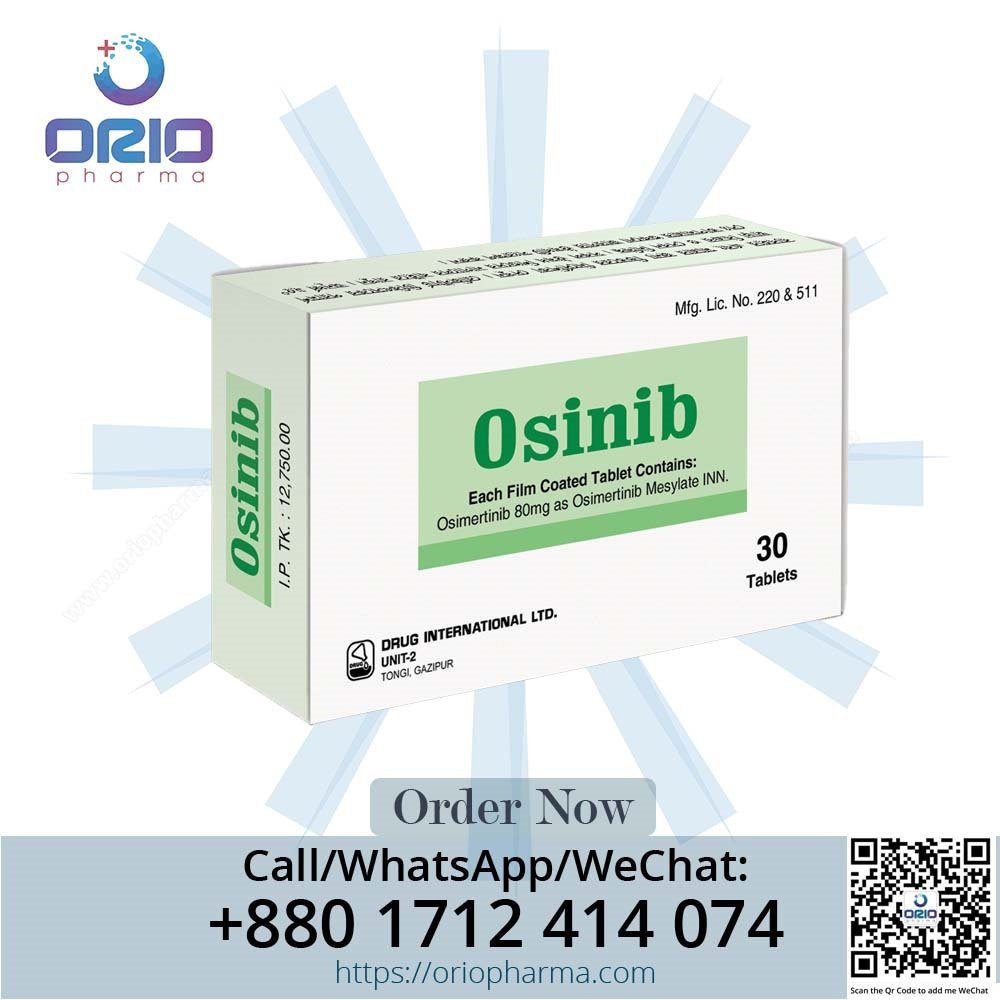
- Osinib (Drug International Ltd.) — available as 40 mg and 80 mg tablets
- Osicent (Incepta Pharmaceuticals Ltd.) — available as 40 mg and 80 mg tablets; Osicent 80 mg is among the most frequently requested presentations
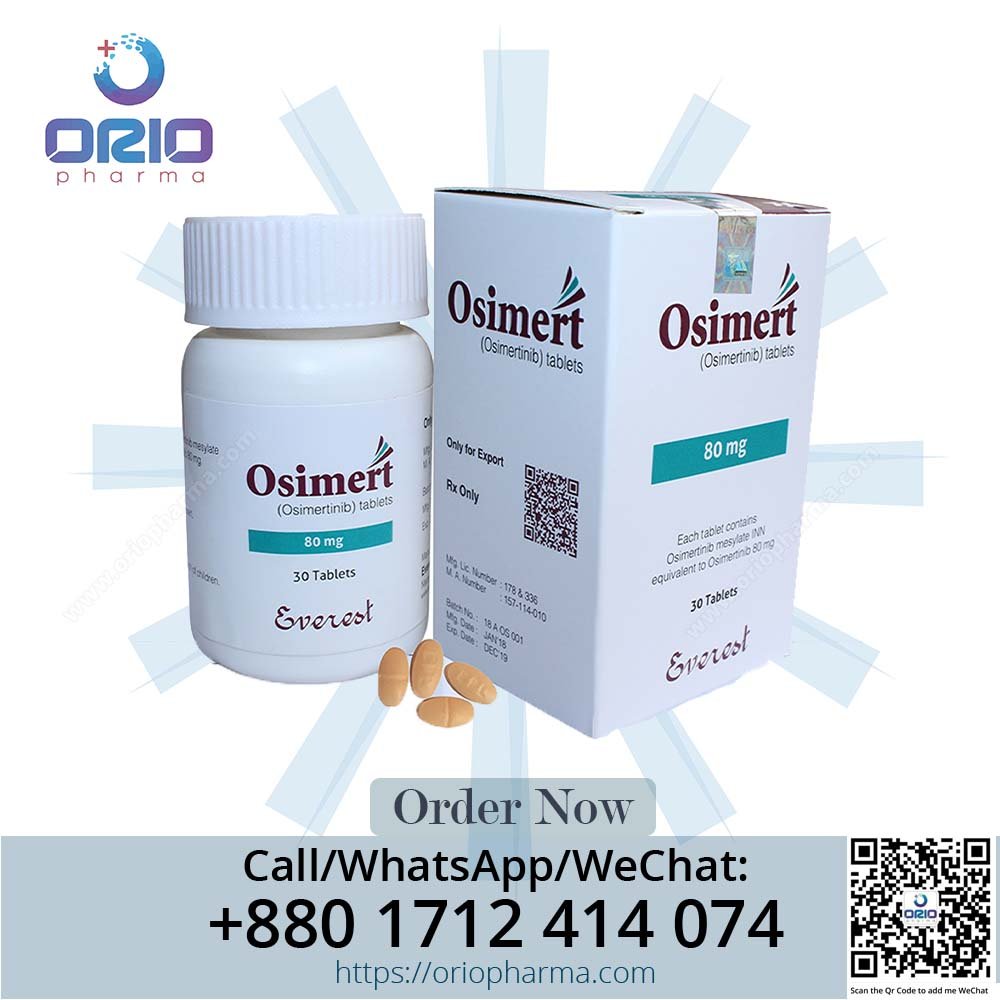
- Osimert (Everest Pharmaceutical Ltd.) — available as 40 mg and 80 mg tablets
All brands listed above are manufactured within Bangladesh and supplied directly from local production facilities. This domestic sourcing model ensures supply chain integrity and supports timely availability for hospitals, oncology centres, and pharmacies operating in the Bangladeshi market.
Procurement buyers based in India and Pakistan are also welcome to inquire about cross-border availability. Our team can advise on supply arrangements and logistics for these markets upon request.

Regulatory Status and DGDA Oversight in Bangladesh
In Bangladesh, all pharmaceutical products containing osimertinib — including Osimatab, Osikin, Tagrix, Osinib, Osicent, and Osimert — are subject to regulatory oversight by the Directorate General of Drug Administration (DGDA), the national medicines authority operating under the Ministry of Health and Family Welfare. The DGDA is responsible for product registration, quality standards, and market authorisation for all pharmaceutical products distributed within Bangladesh. Further information on regulatory requirements is available at dgda.gov.bd.
For broader global context, osimertinib has received multiple approvals from the U.S. Food and Drug Administration (FDA), covering EGFR T790M mutation-positive NSCLC, first-line treatment of metastatic NSCLC with EGFR exon 19 deletions or L858R mutations, adjuvant treatment of NSCLC, and locally advanced unresectable stage III NSCLC. These international approvals reflect the robust clinical evidence base supporting osimertinib’s use across multiple treatment settings.
All regulatory compliance decisions for procurement and dispensing within Bangladesh should be made in accordance with current DGDA guidelines and applicable national pharmaceutical law.

Safety Information: Side Effects and Key Precautions
Healthcare providers and procurement teams should be familiar with the established safety profile of osimertinib. All clinical management decisions must be directed by the treating physician in accordance with the official prescribing information.
Common side effects reported with osimertinib include: diarrhoea, rash, dry skin, nail toxicity, stomatitis, reduced appetite, leukopenia, thrombocytopenia, neutropenia, lymphopenia, increased blood creatinine, musculoskeletal pain, and cough. These adverse effects are consistent with the class profile of EGFR tyrosine kinase inhibitors and are generally manageable with appropriate clinical monitoring.
Serious adverse reactions requiring prompt clinical attention include:
- Interstitial lung disease (ILD) / Pneumonitis: If ILD or pneumonitis is confirmed, osimertinib therapy must be permanently discontinued.
- QTc interval prolongation: If the QTc interval exceeds 500 milliseconds on at least two separate ECG assessments, therapy must be withheld. Resumption and any dose adjustment are determined by the treating physician per prescribing information.
- Cardiomyopathy: Cardiac function should be monitored as clinically indicated.
- Keratitis: Patients reporting ocular symptoms should be evaluated promptly.
- Embryo-fetal toxicity: Osimertinib can cause fetal harm. Appropriate contraceptive counselling is required.
Drug interactions: Concomitant use with strong CYP3A4 inducers should be avoided. If co-administration is unavoidable, the treating physician should refer to the prescribing information for guidance.
Lactation: Breastfeeding is not recommended during osimertinib treatment.
How to Inquire About Osimertinib Supply
We supply osimertinib tablets — including Osimatab, Osikin, Tagrix, Osinib, Osicent, and Osimert — sourced directly from Bangladeshi manufacturers to hospitals, oncology centres, retail and institutional pharmacies, and healthcare procurement teams across Bangladesh. All brands are available in both 40 mg and 80 mg tablet strengths.
To inquire about product availability, stock levels, or to place a bulk or single-unit order, please contact our procurement team directly. We do not publish pricing on this platform; all pricing information is provided upon direct inquiry based on order volume and delivery requirements.
Procurement buyers in India and Pakistan are equally welcome to reach out regarding availability and cross-border supply arrangements. Our team is experienced in facilitating pharmaceutical sourcing from Bangladeshi manufacturers to buyers across the region.
For oncology procurement professionals seeking reliable, manufacturer-direct supply of osimertinib tablets in Bangladesh, we encourage you to learn more about how we support cancer patient access through our supply network. Contact us today to discuss your requirements and confirm current availability.
Frequently Asked Questions
What type of cancer is osimertinib used for?
Osimertinib is used specifically for non-small cell lung cancer (NSCLC) in adult patients whose tumours carry EGFR exon 19 deletions or exon 21 (L858R) substitution mutations, confirmed by an approved diagnostic test. It is approved across multiple settings including adjuvant post-resection treatment, first-line metastatic NSCLC, previously treated T790M mutation-positive NSCLC, and locally advanced unresectable stage III NSCLC. It is not indicated for other cancer types or for NSCLC without confirmed EGFR mutation status.
What are the common side effects of osimertinib?
Common side effects of osimertinib include diarrhoea, rash, dry skin, nail toxicity, stomatitis, and reduced appetite, among others such as leukopenia, neutropenia, and musculoskeletal pain. Serious reactions — including interstitial lung disease, QTc interval prolongation, and cardiomyopathy — require prompt clinical evaluation and may necessitate dose adjustment or permanent discontinuation. All side effect management should be directed by the treating physician in accordance with the official prescribing information.
Is osimertinib safe to take while breastfeeding?
Breastfeeding is not recommended during osimertinib treatment. Osimertinib also carries a risk of embryo-fetal toxicity, so appropriate contraceptive counselling is required for patients of childbearing potential. Patients should discuss family planning considerations with their treating physician before and during therapy.
Does osimertinib interact with other medications?
Concomitant use of osimertinib with strong CYP3A4 inducers should be avoided, as these can affect the drug’s activity. If co-administration is unavoidable, the treating physician should consult the prescribing information for appropriate guidance. Patients should inform their healthcare provider of all medications they are taking before starting osimertinib.
Which osimertinib brands are available for procurement in Bangladesh?
Six osimertinib tablet brands are available, all sourced directly from Bangladeshi manufacturers: Osimatab (Eskayef Pharmaceuticals), Osikin (Ziska Pharmaceuticals), Tagrix (Beacon Pharmaceuticals), Osinib (Drug International), Osicent (Incepta Pharmaceuticals), and Osimert (Everest Pharmaceutical). All brands are available in both 40 mg and 80 mg tablet strengths to support flexible clinical use. Procurement buyers in India and Pakistan are also welcome to inquire about cross-border supply arrangements.
How can hospitals or pharmacies place an order for osimertinib tablets?
Hospitals, oncology centres, and pharmacies can contact our procurement team directly to inquire about product availability, stock levels, and order placement for any of the six Bangladeshi-manufactured osimertinib brands. Pricing is not published on this platform and is provided upon direct inquiry based on order volume and delivery requirements. Buyers across Bangladesh as well as those in India and Pakistan are encouraged to reach out to discuss their specific supply needs.
- 1. www.skpharmabd.com
- 2. www.drugs.com
- 3. www.fda.gov
- 4. www.drugs.com
- 5. www.accessdata.fda.gov
- 6. www.fda.gov
Access This Medicine Through Orio Pharma
We are a specialist oncology medicine supplier delivering to patients, pharmacies, hospitals, and distributors worldwide. Contact us for availability and sourcing support.
We do not publish prices online. All pricing is provided directly by our specialist supply team on request.
Medical Information Notice: This content is for informational purposes only and is based on official pharmaceutical product documentation. It does not constitute medical advice. Patients should consult their doctor or pharmacist before taking any medication.
Regulatory Disclaimer: Sourcing and distribution are subject to regional import regulations, quotas, and verified medical prescriptions where applicable. Pricing and availability are subject to change without notice.
Content Currency: This article was last reviewed and updated in July 2026. Regulatory approval statuses and product availability are subject to change; readers are advised to consult official regulatory databases for the most current information.