
Last Updated: July 2026
Published by: Orio Pharma — a specialist Bangladeshi pharmaceutical supplier serving patients, pharmacies, and distributors worldwide.
Medical Review: Reviewed by Dr. Rakib Uddin Ahmed, MBBS, MD (Hematology)
Content Basis: This article is based on official prescribing information and regulatory product documentation from the FDA, EMA, and SFDA (Saudi Food and Drug Authority).
Sources: FDA prescribing information, EMA EPAR, SFDA, DrugBank
Key Takeaways
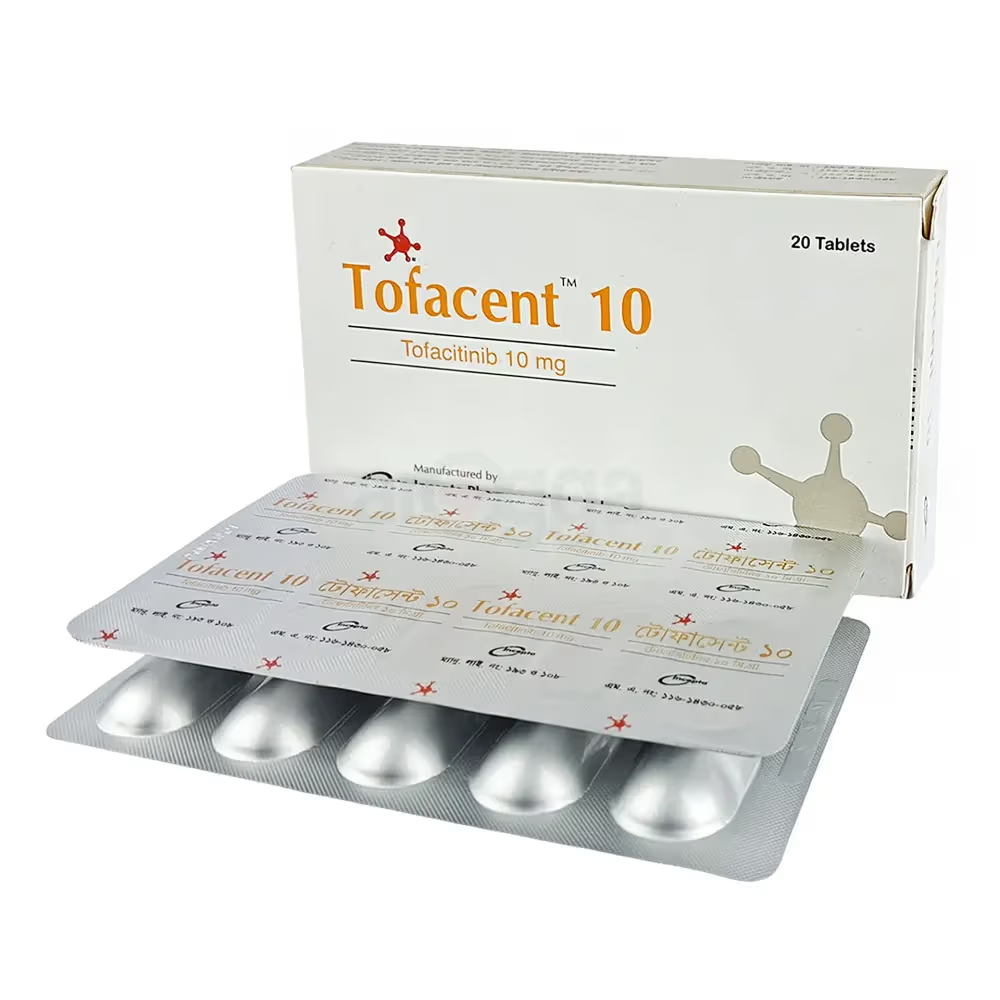
- Tofacent is a Janus kinase (JAK) inhibitor manufactured by Incepta Pharmaceuticals Ltd in Bangladesh, with tofacitinib as its active ingredient, classified as a Disease-modifying Antirheumatic Drug (DMARD).
- It is approved across five inflammatory indications: moderately to severely active rheumatoid arthritis (RA), active psoriatic arthritis (PsA), active ankylosing spondylitis (AS), moderately to severely active ulcerative colitis (UC), and active polyarticular course juvenile idiopathic arthritis (pcJIA) in patients 2 years and older.
- Tofacent is available in multiple dosage forms — including immediate-release tablets, extended-release tablets, and an oral solution — giving prescribers flexibility to meet individual patient needs.
- Common side effects include nasopharyngitis, upper respiratory tract infections, diarrhea, and headache; serious risks include malignancies, serious infections, thrombosis (including pulmonary embolism), and major adverse cardiovascular events (MACE), requiring physician supervision throughout treatment.
- Co-administration with live virus vaccines is contraindicated, and CYP3A4 and CYP2C19 drug interactions require careful clinical evaluation before prescribing alongside other medications.
- Procurement of Tofacent for the Kingdom of Saudi Arabia and the wider Middle East requires compliance with SFDA registration and importation requirements; buyers should confirm local regulatory status prior to initiating any supply arrangement.
What Is Tofacent (Tofacitinib)?
Tofacent is a Janus kinase (JAK) inhibitor manufactured by Incepta Pharmaceuticals Ltd, a Bangladesh-based pharmaceutical company established in 1999. Its active ingredient, tofacitinib, belongs to the Disease-modifying Antirheumatic Drug (DMARD) therapeutic class and represents a targeted oral therapy for several chronic inflammatory conditions.
Clinically, Tofacent is approved for use across five indications: moderately to severely active rheumatoid arthritis (RA) in adults with an inadequate response or intolerance to methotrexate; active psoriatic arthritis in adults with an inadequate response or intolerance to methotrexate or other DMARDs; active ankylosing spondylitis (AS) in adults with an inadequate response or intolerance to one or more TNF blockers; moderately to severely active ulcerative colitis (UC) in adults; and active polyarticular course juvenile idiopathic arthritis (pcJIA) in children and adolescents 2 years and older. Tofacent 5 mg is among the most commonly referenced strengths in clinical procurement discussions, reflecting the drug’s broad therapeutic utility across autoimmune and inflammatory disease categories.
For B2B procurement professionals operating in the Kingdom of Saudi Arabia and the wider Middle East, Tofacent represents a Bangladeshi-manufactured alternative within the JAK inhibitor class, offering a documented therapeutic profile across multiple rheumatologic and gastroenterologic indications.
Mechanism of Action: How Tofacitinib Works
Tofacitinib exerts its therapeutic effect by selectively inhibiting Janus kinase enzymes — intracellular signaling proteins that play a central role in the inflammatory cascade. It modulates signaling through three key JAK pairings — JAK1/JAK2, JAK1/JAK3, and JAK2/TYK2 — reflecting its primary selectivity for JAK1 and JAK3, with minor activity against JAK2 and TYK2.
Under normal physiological conditions, cytokines bind to cell-surface receptors and activate JAK enzymes, which in turn phosphorylate Signal Transducers and Activators of Transcription (STATs). Phosphorylated STATs translocate to the nucleus and drive transcription of pro-inflammatory genes. Tofacitinib interrupts this process by preventing JAK phosphorylation, thereby blocking STAT activation and downstream cytokine signaling.
In moderately to severely active rheumatoid arthritis, this mechanism translates into a meaningful reduction in the inflammatory response that drives joint destruction, synovitis, and systemic symptoms. By targeting the JAK-STAT pathway — a convergence point for multiple cytokines, including interleukins and interferons — tofacitinib addresses the underlying immunopathology of RA rather than merely managing symptoms. This intracellular mechanism distinguishes JAK inhibitors from biologic DMARDs, which act extracellularly on cytokines or their receptors.
Approved Indications and Clinical Use
Tofacent is approved for five distinct inflammatory indications, making it a clinically versatile agent within the DMARD category:
- Rheumatoid Arthritis (moderately to severely active): The primary indication for Tofacent is adult patients with an inadequate response or intolerance to methotrexate. Tofacitinib may be used as monotherapy or in combination with methotrexate or other nonbiologic DMARDs for the management of moderately to severely active rheumatoid arthritis in adults who have had an inadequate response or intolerance to one or more TNF-blocking agents.
- Psoriatic Arthritis (active): Indicated in adults who have had an inadequate response or intolerance to methotrexate or other DMARDs, addressing both joint and skin manifestations of the disease.
- Ankylosing Spondylitis: Approved for adults who have had an inadequate response or intolerance to one or more TNF blockers, managing this chronic inflammatory spinal condition.
- Ulcerative Colitis: Indicated for moderately to severely active disease in adults, extending the clinical utility of tofacitinib beyond rheumatology into gastroenterology.
- Polyarticular Course Juvenile Idiopathic Arthritis: Approved for children and adolescents 2 years and older with this chronic childhood arthritis condition.
Regarding whether Tofacent is safe: like all JAK inhibitors, it carries a defined safety profile that requires physician supervision. Clinical use should always be guided by a qualified treating physician in accordance with the full prescribing information. Safety considerations relevant to procurement decisions are addressed in detail below.
Available Strengths and Dosage Forms
Tofacent is available in five distinct dosage forms, giving prescribers flexibility to tailor administration to individual patient needs:
- 5 mg film-coated immediate-release tablet
- 10 mg film-coated immediate-release tablet
- 11 mg extended-release tablet
- 22 mg extended-release tablet
- 1 mg/mL oral solution — a liquid option for patients requiring flexible administration
All forms are administered orally. The oral solution is particularly relevant for patient populations where tablet administration may not be appropriate. Specific dosing schedules, frequency, and any required dose modifications are determined exclusively by the treating physician in accordance with the official prescribing information. Procurement teams should ensure that the correct dosage form and strength are specified at the point of order.
Safety Profile: Side Effects and Precautions
Healthcare procurement professionals and clinical buyers should be fully aware of the established safety profile of tofacitinib when evaluating Tofacent for formulary inclusion or institutional supply.
Common adverse effects reported in clinical use include nasopharyngitis, upper respiratory tract infections, pneumonia, influenza, sinusitis, pharyngitis, bronchitis, cough, diarrhea, and headache. These events reflect the immunomodulatory nature of JAK inhibition and are consistent with the class profile.
Serious risks associated with tofacitinib include malignancies (such as lymphomas, lung cancer, and solid tumors), serious infections including Pneumocystis jirovecii pneumonia, pneumococcal pneumonia, and bacterial pneumonia, thrombosis, including pulmonary embolism and deep vein thrombosis, interstitial lung disease, and major adverse cardiovascular events (MACE). These risks are not to be minimised and require careful patient selection, monitoring, and ongoing clinical oversight.
Vaccine precaution: Co-administration with live virus vaccines is contraindicated during Tofacent therapy. This is a critical consideration for patient management protocols.
Lactation: Risk data is available; prescribers and patients should consult a doctor for guidance on use during breastfeeding.
Drug interaction risks via the CYP3A4 and CYP2C19 pathways also contribute to the overall precautionary framework and are addressed in the following section.
Drug Interactions: CYP Pathways and Co-administration Risks
Tofacitinib is metabolised primarily as a major substrate of the CYP3A4 enzyme and secondarily as a minor substrate of CYP2C19. These metabolic pathways have direct implications for co-administration decisions in clinical practice.
CYP3A4 inducers: Strong CYP3A4 inducers — such as certain anticonvulsants and rifamycin-class antibiotics — can significantly decrease tofacitinib plasma concentrations, potentially reducing clinical response. Prescribers should evaluate the therapeutic adequacy of Tofacent when such agents are co-administered.
CYP3A4 and CYP2C19 inhibitors: Strong CYP3A4 inhibitors, or the combination of a moderate CYP3A4 inhibitor with a CYP2C19 inhibitor, may increase tofacitinib exposure. In these scenarios, dose adjustment per the official prescribing information is required.
Procurement and clinical teams supplying Tofacent to institutional buyers in Saudi Arabia should ensure that prescribers have access to the complete interaction profile. All co-administration decisions must be directed by the treating physician with reference to the current prescribing information.
Regulatory Status and Market Access in the Middle East
Tofacitinib holds FDA-approved status across multiple indications, establishing a well-documented regulatory foundation for the active ingredient. Incepta Pharmaceuticals Ltd, the Bangladesh-based manufacturer of Tofacent, has been operating since 1999 and produces tofacitinib as a therapeutically equivalent formulation to the originator product in this class.
For buyers operating in the Kingdom of Saudi Arabia, market access for imported pharmaceutical products is governed by the Saudi Food and Drug Authority (SFDA). Importers and distributors are required to comply with SFDA registration and importation requirements before Tofacent can be legally procured and distributed within the Kingdom. Procurement professionals are strongly advised to confirm the current local registration status of Tofacent with the SFDA prior to initiating any supply arrangement.
The broader Middle East market for JAK inhibitors continues to grow as rheumatology and gastroenterology treatment guidelines increasingly incorporate targeted synthetic DMARDs. Bangladeshi-manufactured products such as Tofacent offer documented therapeutic profiles that align with international clinical standards, subject to applicable national regulatory approvals in each target market.
Why Source Tofacent Through a Specialist B2B Supplier?
Sourcing Bangladeshi-manufactured pharmaceuticals for international markets — particularly the Middle East and the Kingdom of Saudi Arabia — requires a supplier with established expertise in cross-border pharmaceutical logistics, regulatory documentation, and supply chain integrity.
As a specialist B2B supplier focused on Bangladeshi pharmaceutical products, we provide procurement teams with direct access to Tofacent, along with the documentation support necessary for international importation. This includes product dossiers, certificates of analysis, and other regulatory paperwork relevant to SFDA and regional compliance requirements.
Our supply chain infrastructure is designed to support institutional buyers, hospital procurement departments, and pharmaceutical distributors seeking reliable, consistent access to brands such as Tofacent. We do not source or distribute Indian-manufactured brands or products outside our verified Bangladeshi supply network.
For organisations evaluating Tofacent for formulary inclusion, tender submissions, or ongoing institutional supply in Saudi Arabia or across the wider Middle East, we are positioned to support your procurement requirements with professionalism and transparency.
Contact us for availability and pricing information on Tofacent.
Frequently Asked Questions
What is Tofacent 5 mg tablet used for?
Tofacent 5 mg is a film-coated immediate-release tablet used to treat several chronic inflammatory conditions, including moderately to severely active rheumatoid arthritis in adults who have had an inadequate response or intolerance to methotrexate, as well as active psoriatic arthritis, active ankylosing spondylitis, moderately to severely active ulcerative colitis, and active polyarticular course juvenile idiopathic arthritis in patients 2 years and older.
What is tofacitinib used for?
Tofacitinib, the active ingredient in Tofacent, is a JAK inhibitor that works by blocking Janus kinase enzymes to reduce the inflammatory signaling that drives conditions such as rheumatoid arthritis, psoriatic arthritis, ankylosing spondylitis, ulcerative colitis, and juvenile idiopathic arthritis. It targets the underlying immunopathology of these diseases rather than simply managing symptoms.
Is Tofacent safe to use?
Tofacent has a defined safety profile that requires ongoing physician supervision; common side effects include nasopharyngitis, upper respiratory tract infections, diarrhea, and headache, while serious risks include malignancies, serious infections such as Pneumocystis jirovecii pneumonia, thrombosis (including pulmonary embolism), and major adverse cardiovascular events. All use must be guided by a qualified treating physician in accordance with the full prescribing information.
What should be avoided when taking Tofacent?
Co-administration with live virus vaccines is contraindicated during Tofacent therapy, and caution is required with strong CYP3A4 inducers, which may reduce clinical effectiveness, as well as strong CYP3A4 inhibitors or combinations of moderate CYP3A4 inhibitors with CYP2C19 inhibitors, which may increase drug exposure. Patients and prescribers should consult the full prescribing information and a qualified physician before starting or adjusting any concomitant medications.
Can your company supply Tofacent to buyers in Saudi Arabia or the Middle East?
Yes, as a specialist B2B supplier of Bangladeshi-manufactured pharmaceuticals, we provide procurement teams with direct access to Tofacent along with the documentation support — including certificates of analysis and product dossiers — required for international importation. Buyers in the Kingdom of Saudi Arabia should confirm current SFDA registration status prior to initiating a supply arrangement.
What documentation is available to support procurement and regulatory compliance for Tofacent?
We provide institutional buyers, hospital procurement departments, and pharmaceutical distributors with relevant regulatory documentation, including product dossiers and certificates of analysis, to support SFDA and regional compliance requirements. Our supply network is limited exclusively to verified Bangladeshi-manufactured brands, and we do not source or distribute products from outside this network.
- 1. FDA — XELJANZ (tofacitinib) Prescribing Information
- 2. EMA — Xeljanz (tofacitinib) European Public Assessment Report
- 3. SFDA — XELJANZ (tofacitinib)
- 4. DrugBank — Tofacitinib (DB08895)
Access This Medicine Through Orio Pharma
We are a specialist Bangladeshi pharmaceutical supplier delivering to patients, pharmacies, hospitals, and distributors worldwide. Contact us for availability and sourcing support.
We do not publish prices online. All pricing is provided directly by our specialist supply team on request.
Medical Information Notice: This content is for informational purposes only and is based on official pharmaceutical product documentation. It does not constitute medical advice. Patients should consult their doctor or pharmacist before taking any medication.
Regulatory Disclaimer: Sourcing and distribution are subject to regional import regulations, quotas, and verified medical prescriptions where applicable. Pricing and availability are subject to change without notice.
Content Currency: This article was last reviewed and updated in July 2026. Regulatory approval statuses and product availability are subject to change; readers are advised to consult official regulatory databases for the most current information.