
Last Updated: July 2026
Published by: Orio Pharma — a specialist oncology medicine supplier serving patients, pharmacies, and distributors worldwide.
Medical Review: Reviewed by Dr. Farhan Hossain, MBBS, MD (Oncology)
Content Basis: This article is based on official prescribing information, product monographs, and regulatory product documentation from the FDA, EMA, and DGDA (Directorate General of Drug Administration, Bangladesh).
Sources: FDA prescribing information, FDA product label, DrugBank
Key Takeaways
Cyclophosphamide is a dual-action alkylating antineoplastic and immunosuppressant agent, FDA-approved since 1959, used across hematologic malignancies and solid tumors — including malignant lymphomas (Stages III and IV), leukemias, breast carcinoma, and ovarian adenocarcinoma.
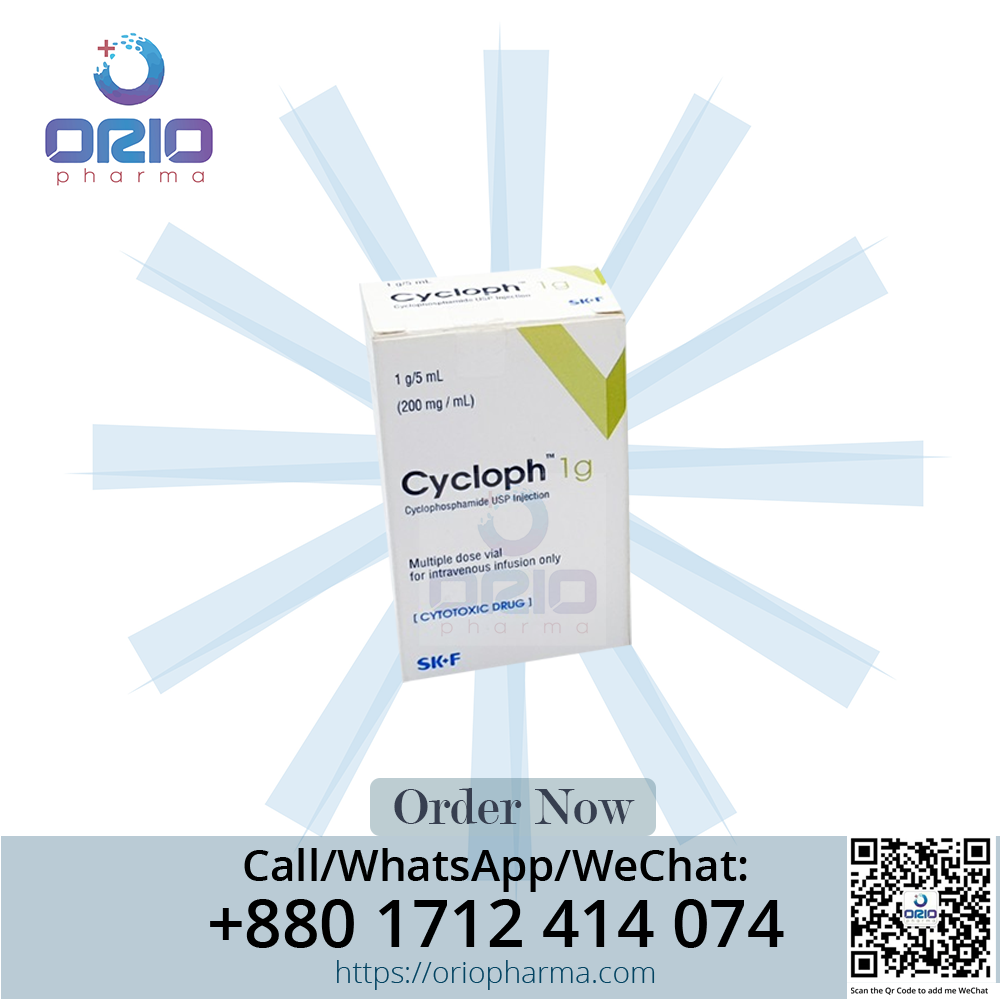
Cycloph, manufactured by Eskayef Pharmaceuticals Ltd in Bangladesh, is supplied in multiple injection strengths and vial sizes, enabling oncology departments to support diverse chemotherapy protocols within a single procurement relationship.
Cyclophosphamide is a high-risk oncology agent. Well-established adverse reactions include nausea, vomiting, alopecia, myelosuppression (neutropenia, leukopenia, thrombocytopenia, and anemia), hemorrhagic cystitis, and a heightened risk of infection — all requiring specialist oversight.
The drug’s cytotoxic mechanism relies on hepatic biotransformation via CYP3A4 into active alkylating metabolites that cross-link tumor cell DNA — the same mechanism that underlies its immunosuppressant properties and its potential for drug interactions.
Cyclophosphamide injection formulations containing alcohol and propylene glycol are not indicated for pediatric patients; pharmacy teams must verify formulation composition when selecting products for pediatric indications.
Institutional buyers in Saudi Arabia must ensure procurement of cyclophosphamide injection complies with current SFDA registration and importation requirements, including appropriate documentation and cold chain standards.
What Is Cyclophosphamide and What Is It Used For?
Cyclophosphamide is a dual-action agent classified as both an alkylating antineoplastic and an immunosuppressant. It has been a cornerstone of oncology treatment protocols for decades, supported by a broad range of FDA-approved indications spanning hematologic malignancies, solid tumors, and select immunologic conditions.
Approved indications for Cyclophosphamide include:
- Malignant lymphomas (Stages III and IV), including Hodgkin’s lymphoma, lymphocytic lymphoma, mixed-cell type lymphoma, histiocytic lymphoma, and Burkitt’s lymphoma
- Multiple myeloma
- Leukemias
- Mycosis fungoides
- Neuroblastoma
- Adenocarcinoma of the ovary
- Retinoblastoma
- Breast carcinoma
- Minimal change nephrotic syndrome in pediatric patients
This breadth of approved indications makes Cyclophosphamide one of the most clinically versatile agents in oncology formularies. Its utility across both adult and pediatric populations — and across hematologic and solid tumor categories — positions it as a high-priority procurement item for oncology departments and hospital pharmacies in the Kingdom of Saudi Arabia and the wider region. Institutional buyers benefit from a single agent capable of supporting multiple treatment protocols.
Drug Classification: What Class Is Cyclophosphamide?
Cyclophosphamide belongs to the alkylating agent class within the broader therapeutic category of antineoplastic and immunosuppressant agents. Alkylating agents are among the oldest and most established drug classes in oncology, and Cyclophosphamide remains one of the most widely used representatives of this class worldwide.
Its mechanism of action depends on hepatic biotransformation. After administration, Cyclophosphamide is metabolized in the liver by the mixed-function microsomal oxidase system — notably CYP3A4 — into active alkylating metabolites. These metabolites cross-link tumor cell DNA strands, interfering with DNA replication and disrupting the growth and proliferation of malignant cells.
This mechanism underpins efficacy across a wide spectrum of malignancies, from lymphomas and leukemias to solid tumors such as breast carcinoma and ovarian adenocarcinoma. The drug’s immunosuppressant properties arise from the same mechanism, explaining its use in conditions such as pediatric minimal change nephrotic syndrome.
Product Specifications: Cycloph Injection by Eskayef Pharmaceuticals
Cycloph is the supplied brand of Cyclophosphamide injection, manufactured by Eskayef Pharmaceuticals Ltd (Bangladesh), a manufacturer with established export capabilities serving institutional and hospital markets internationally.
Cycloph is available in the following injection strengths and presentations:
- 200 mg/mL injection
- 500 mg/5 mL (100 mg/mL) injection
- 1 g/5 mL injection
- 1,000 mg/10 mL (100 mg/mL) injection
- 2,000 mg/20 mL (100 mg/mL) injection
This range of concentrations and vial sizes supports flexible institutional use across varied oncology protocols, including high-volume inpatient chemotherapy settings. Procurement teams can align vial selection with departmental usage patterns to minimize waste and optimize inventory management.
⚠ Important formulation note: Cyclophosphamide injection products containing alcohol and propylene glycol are not indicated for use in pediatric patients. Prescribers and pharmacy teams should verify formulation composition when selecting products for pediatric oncology or nephrology indications.
Cyclophosphamide has held FDA approval since 1959 — over six decades of continuous clinical validation and regulatory recognition, a meaningful marker of the long-standing safety and efficacy data that supports institutional procurement confidence.
Safety Profile: Major Side Effects and Risk Considerations
⚠ CRITICAL SAFETY INFORMATION: Cyclophosphamide is unequivocally a high-risk oncology agent. Its use requires specialist oversight by qualified oncologists, and all administration, monitoring, and safety management must be directed by the treating physician in accordance with the official prescribing information.
Common Adverse Reactions
The most frequently reported, well-established adverse reactions to Cyclophosphamide include:
- Nausea and vomiting: among the most common reactions, typically dose-related and managed with supportive antiemetic care.
- Alopecia (hair loss): frequently reported and generally reversible after treatment ends.
- Myelosuppression: bone marrow suppression that presents as neutropenia, leukopenia, thrombocytopenia, and anemia, requiring regular hematologic monitoring.
- Hemorrhagic cystitis: bladder toxicity that calls for adequate hydration and vigilant monitoring during therapy.
- Increased risk of infection: a direct consequence of immunosuppression and neutropenia, demanding prompt clinical attention to any signs of infection.
Serious and Potentially Fatal Adverse Effects
- Severe myelosuppression and bone marrow failure: the most clinically significant toxicity, requiring regular hematologic monitoring throughout treatment.
- Severe immunosuppression leading to serious and sometimes fatal infections: patients are at elevated risk of opportunistic and bacterial infections due to profound immunosuppression.
- Hemorrhagic cystitis and hemorrhagic ureteritis: serious urologic complications requiring vigilant monitoring and preventive hydration strategies.
- Renal tubular necrosis: potential for significant nephrotoxicity, particularly with prolonged use.
- Interstitial pulmonary fibrosis: associated with high-dose, prolonged administration regimens.
- Anaphylactic reactions: severe hypersensitivity reactions have been reported, including fatalities.
- SIADH (Syndrome of Inappropriate Antidiuretic Hormone Secretion): electrolyte disturbances requiring clinical monitoring.
Additional adverse effects include interstitial pneumonitis, malaise, and asthenia. Because CYP3A4 is central to its metabolism, clinically relevant drug interactions are possible and must be assessed before therapy begins.
Institutional buyers and pharmacy procurement teams should ensure that Cycloph is dispensed exclusively within appropriately equipped oncology settings with full supportive care infrastructure in place.
Cyclophosphamide in the Kingdom of Saudi Arabia: Regulatory Context
In the Kingdom of Saudi Arabia, the Saudi Food and Drug Authority (SFDA) is the national regulatory body responsible for the approval, registration, and importation control of pharmaceutical products, including oncology agents. All antineoplastic drugs used within KSA healthcare institutions must comply with SFDA registration requirements and applicable importation regulations.
As an internationally established antineoplastic agent with FDA approval dating to 1959, Cyclophosphamide carries a well-documented global regulatory history that supports its recognition within international procurement frameworks. Institutional buyers — including licensed hospital pharmacies, oncology centers, and wholesale distributors operating in Saudi Arabia — must nonetheless ensure that any procurement of cyclophosphamide injection is conducted in full compliance with current SFDA requirements.
This includes:
- Verifying product registration status
- Maintaining appropriate import documentation
- Adhering to cold chain and storage standards applicable to injectable oncology agents
Saudi oncology centers in both the public sector (such as Ministry of Health facilities and specialized cancer centers) and the private sector routinely procure alkylating agents as part of standard chemotherapy formularies. Procurement professionals are advised to work with suppliers who understand the SFDA compliance landscape and can provide the documentation needed to support institutional purchasing.
For context on how targeted and precision oncology agents are increasingly shaping treatment alongside established agents like Cyclophosphamide, see our overview of the role of targeted therapy in cancer treatment.
Pharmacokinetic Key Facts
Understanding the pharmacokinetic profile of Cyclophosphamide is relevant for clinical pharmacists and procurement professionals evaluating its formulation requirements and clinical utility:
- Elimination half-life:
- The unchanged drug has an elimination half-life of 3 to 12 hours, reflecting moderate systemic clearance.
- Oral bioavailability:
- Greater than 75% bioavailability is achieved after oral administration, indicating efficient gastrointestinal absorption when oral formulations are used.
- Urinary excretion:
- Between 5% and 25% of the administered dose is excreted in urine as unchanged drug; the remainder is eliminated as active and inactive metabolites.
- Metabolite plasma peak:
- Active metabolites reach maximum plasma levels approximately 2 to 3 hours after intravenous administration — relevant for timing monitoring and supportive interventions.
Cyclophosphamide is most often used concurrently or sequentially with other antineoplastic agents as part of combination chemotherapy, a key consideration for oncology departments managing multi-drug protocol procurement. Specific dosing regimens and administration schedules are determined entirely by the treating physician per the official prescribing information.
Sourcing Cycloph for Institutional and B2B Buyers in Saudi Arabia
For hospital procurement teams, oncology pharmacy buyers, and wholesale distributors in the Kingdom of Saudi Arabia, Cycloph is a reliable, Bangladeshi-manufactured cyclophosphamide injection option sourced directly from Eskayef Pharmaceuticals Ltd. Manufactured in Bangladesh and exported for international institutional markets, Cycloph is positioned to meet the volume and consistency requirements of oncology departments across the KSA healthcare sector.
Key procurement advantages:
- Multiple vial strengths — from 200 mg/mL through 2,000 mg/20 mL — let a single product line support diverse oncology protocols within one procurement relationship.
- This simplifies formulary management for institutions treating a broad patient population across indications including malignant lymphomas, leukemias, breast carcinoma, and ovarian adenocarcinoma.
Our distribution network is structured to serve the Saudi Arabian market with institutional-volume order fulfillment, supported by the documentation and compliance infrastructure required for SFDA-regulated importation. For teams evaluating oncology supply chains, consolidating cyclophosphamide sourcing through a single, export-capable Bangladeshi manufacturer offers clear logistical and administrative efficiencies.
To learn more about how oncology drug supply supports patient care at the institutional level, visit our resource on supporting cancer patients through pharmacy supply.
To inquire about Cycloph availability, current stock, and institutional supply arrangements for the Saudi Arabian market, please contact our procurement team directly through the inquiry form on this site.
Frequently Asked Questions
What is Cyclophosphamide used for?
Cyclophosphamide is used to treat a wide range of cancers, including malignant lymphomas (Stages III and IV) such as Hodgkin’s lymphoma, multiple myeloma, leukemias, breast carcinoma, neuroblastoma, retinoblastoma, and adenocarcinoma of the ovary, as well as minimal change nephrotic syndrome in pediatric patients. Its dual classification as both an antineoplastic and immunosuppressant agent makes it one of the most clinically versatile drugs in oncology formularies.
What are the side effects of Cyclophosphamide?
Common adverse reactions include nausea, vomiting, alopecia (hair loss), myelosuppression (neutropenia, leukopenia, thrombocytopenia, and anemia), hemorrhagic cystitis, and an increased risk of infection. Serious, potentially fatal effects include severe bone marrow failure, profound immunosuppression leading to serious infections, renal tubular necrosis, interstitial pulmonary fibrosis, and anaphylactic reactions. Because of this risk profile, Cyclophosphamide must be administered exclusively under specialist oncologist supervision in settings with full supportive care infrastructure.
What class of drug is Cyclophosphamide?
Cyclophosphamide belongs to the alkylating agent class within the broader therapeutic category of antineoplastic and immunosuppressant agents. It exerts its cytotoxic effect through active metabolites — produced via hepatic CYP3A4 biotransformation — that cross-link tumor cell DNA strands, disrupting malignant cell replication and growth.
Is Cyclophosphamide considered a high-risk drug?
Yes. Cyclophosphamide is unequivocally a high-risk oncology agent because of its potential for severe, life-threatening toxicities including bone marrow failure, fatal infections from immunosuppression, and anaphylactic reactions. Its administration requires qualified oncologist oversight, regular hematologic monitoring, and access to appropriate supportive care throughout treatment.
Can your company supply Cycloph injection to hospital pharmacies in Saudi Arabia?
Yes. We supply Cycloph — the Cyclophosphamide injection manufactured by Eskayef Pharmaceuticals Ltd in Bangladesh — to institutional buyers including hospital pharmacies and oncology centers in the Kingdom of Saudi Arabia. Our distribution network is structured to support institutional-volume orders with the compliance documentation required for SFDA-regulated importation. Please use the inquiry form on this site to discuss your facility’s requirements.
What vial sizes of Cycloph are available for institutional procurement?
Cycloph is available in five injection presentations: 200 mg/mL, 500 mg/5 mL (100 mg/mL), 1 g/5 mL, 1,000 mg/10 mL (100 mg/mL), and 2,000 mg/20 mL (100 mg/mL). This range allows procurement teams to align vial selection with departmental usage patterns across multiple oncology protocols, minimizing waste and simplifying formulary management.
- FDA Prescribing Information — Cyclophosphamide (accessdata.fda.gov)
- FDA Product Label — Cyclophosphamide (accessdata.fda.gov)
- DrugBank — Cyclophosphamide (DB00531)
Access This Medicine Through Orio Pharma
We are a specialist oncology medicine supplier delivering to patients, pharmacies, hospitals, and distributors worldwide. Contact us for availability and sourcing support.
We do not publish prices online. All pricing is provided directly by our specialist supply team on request.
Medical Information Notice: This content is for informational purposes only and is based on official pharmaceutical product documentation. It does not constitute medical advice. Patients should consult their doctor or pharmacist before taking any medication.
Regulatory Disclaimer: Sourcing and distribution are subject to regional import regulations, quotas, and verified medical prescriptions where applicable. Availability is subject to change without notice.
Content Currency: This article was last reviewed and updated in July 2026. Regulatory approval statuses and product availability are subject to change; readers are advised to consult official regulatory databases for the most current information.